


10-Minute Match | Nigeria Make History | 1994 Excitement
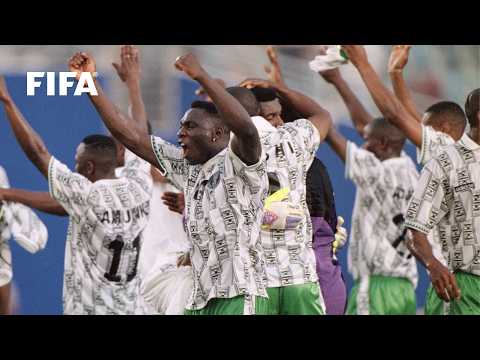
Nigeria's Iconic 1994 World Cup Moment: A 10-Minute Thrill That Made History
Relive the electrifying performance that captivated the world and etched the Super Eagles into football folklore.
Unpacking Nigeria's 1994 World Cup Legacy
We present this content in a sports-style analytical format, inspired by professional football coverage and based on available verified information, delving into Nigeria's groundbreaking participation in the FIFA World Cup.
Article Highlights
- Introduction: The Dawn of an Era
- The 10-Minute Blitz: How History Was Made
- Tactical Brilliance and Team Spirit
- Voices from the Pitch and Beyond
- A Legacy Forged: Impact on Future World Cups
- Expert Breakdown: Beyond the Scoreline
- Key Facts Grid: Tournament Snapshot
- The Unfolding Story: A Timeline
- What Happens Next: Inspiring 2026
- Conclusion: An Unforgettable Chapter
- Engage with FIFA Media
Introduction: The Dawn of an Era
The year 1994 marked a pivotal moment in the annals of Nigerian and African football. For the first time ever, the Super Eagles soared onto the global stage, making their debut at the FIFA World Cup hosted in the United States. It wasn't just participation; it was a statement. A statement delivered with a potent mix of flair, power, and an unforgettable 10-minute period that etched their names into history.
Before 1994, African nations had sporadically appeared at the World Cup, often celebrated for their spirit but rarely for significant competitive breakthroughs. Nigeria arrived not merely to compete, but to truly challenge. Fresh off a dominant African Cup of Nations triumph, the Super Eagles carried the hopes of a continent, an expectation they met with spectacular zeal. This article delves into that inaugural journey, focusing on the specific electrifying moments that defined their legacy and continue to inspire future generations striving for glory at tournaments like the upcoming FIFA World Cup 2026.
Their story is one of raw talent, tactical audacity, and a captivating blend of individual brilliance and cohesive teamwork. It's a testament to how quickly a team can capture the imagination of the world, and how a short, intense period of play can resonate through decades, becoming a benchmark for national football ambition. Join us as we revisit the excitement, the strategy, and the sheer joy of Nigeria's historic 1994 World Cup adventure.
The 10-Minute Blitz: How History Was Made
Nigeria's entry into the 1994 FIFA World Cup Group D alongside Argentina, Greece, and Bulgaria was met with a mix of curiosity and skepticism. Few pundits predicted the impact they would have. Their opening match against Bulgaria on June 21, 1994, at the Cotton Bowl in Dallas, Texas, became the stage for a performance that would defy expectations and announce their arrival with resounding force. This was where the "10-minute match" truly began to unfold, not as a literal short game, but as a period of absolute domination and breathtaking football.
From the kick-off, the Super Eagles displayed an intensity and confidence that immediately put Bulgaria on the back foot. The Nigerian side, under the astute guidance of Dutch coach Clemens Westerhof, attacked with verve. It was in the first half that Nigeria unleashed its most potent spell. In the 21st minute, Rashidi Yekini etched his name into history, scoring Nigeria's first-ever World Cup goal with a powerful finish after a brilliant run and assist from Finidi George. His iconic celebration, grasping the net in sheer disbelief and jubilation, became one of the tournament's most enduring images.
This goal was just the beginning. The Super Eagles didn't ease off; instead, they intensified their pressure. Just nine minutes later, Daniel Amokachi doubled Nigeria's lead with a sublime individual effort. Receiving the ball on the left, he drove into the box, shrugging off defenders before unleashing a shot that found the back of the net. This rapid-fire succession of goals, orchestrated by a team playing with exhilarating freedom and tactical discipline, dismantled Bulgaria's resolve and sent a clear message to the world: Nigeria was here to play.
The ten minutes between Yekini's historic opener and Amokachi's strike showcased Nigeria at their absolute peak. It was a whirlwind of offensive prowess, defensive solidity, and midfield dominance. Jay-Jay Okocha’s dazzling dribbles, Sunday Oliseh’s commanding presence, and the relentless runs of Finidi George and Emmanuel Amuneke created an unstoppable force. While the match continued for 90 minutes, securing a resounding 3-0 victory with Amuneke adding a third goal in the second half, it was that initial, explosive ten-minute burst that truly defined Nigeria's bold introduction to global football, leaving an indelible mark on everyone who witnessed it.
Team Analysis: Tactical Brilliance and Unyielding Spirit
The 1994 Nigerian squad was more than just a collection of talented individuals; it was a cohesive unit forged by years of development and strategic planning. Coach Clemens Westerhof, a Dutch tactician, had spent five years with the team, meticulously building a side capable of competing at the highest level. His approach was a blend of European discipline and African flair, a combination that proved devastatingly effective.
Preparation and Strategy
Westerhof's preparation for the World Cup was exhaustive. He focused on fitness, tactical awareness, and instilling a winning mentality. The team’s formation often involved a fluid 4-4-2 or 3-5-2, allowing for quick transitions from defense to attack. The midfield, anchored by the likes of Sunday Oliseh and Mutiu Adepoju, was robust and creative, capable of winning possession and launching rapid counter-attacks. The wide players, Finidi George and Emmanuel Amuneke, were crucial, providing pace, dribbling ability, and dangerous crosses.
Key Players and Their Roles
- Rashidi Yekini: The undisputed goal machine, Yekini’s physicality and clinical finishing made him a constant threat. His opening goal against Bulgaria encapsulated his predatory instincts.
- Jay-Jay Okocha: Even at a younger age, Okocha's incredible dribbling skills and vision were evident. He provided moments of magic that could unlock any defense.
- Sunday Oliseh: A formidable defensive midfielder, Oliseh dictated the tempo of play, breaking up opposition attacks and distributing the ball with precision.
- Finidi George & Emmanuel Amuneke: These wingers provided width, pace, and goal-scoring opportunities, epitomizing the Super Eagles' attacking philosophy.
- Uche Okechukwu & Stephen Keshi (Captain): Formed a solid defensive partnership, bringing experience and composure to the backline.
The tactical implications of Westerhof's system were clear: overwhelm opponents with speed and skill, control the midfield, and exploit defensive vulnerabilities. The Super Eagles played with a joyous abandon that belied their World Cup debut status, demonstrating a belief in their own abilities that resonated with fans worldwide. This blend of individual brilliance and collective synergy was the bedrock of their historic performance, setting a high standard for future Nigerian national teams.
Player and Coach Reactions: Voices from the Pitch and Beyond
The euphoria surrounding Nigeria’s 1994 World Cup performance was palpable, both within the squad and among fans. The players themselves knew they were making history, and their reactions captured the essence of their groundbreaking journey.
Clemens Westerhof's Vision
Coach Clemens Westerhof, often described as the architect of modern Nigerian football, expressed immense pride in his team. "We showed the world what African football is capable of," he was quoted saying after the Bulgaria match. "This team has character, talent, and a belief that can take them far. We trained hard, and they executed the plan perfectly. This is a message to everyone." Westerhof's long-term investment in the team finally paid off on the grandest stage, validating his strategic vision.
Player Testimonials
Rashidi Yekini, forever remembered for Nigeria's first World Cup goal, famously celebrated by shaking the net, a moment of pure, unadulterated joy. While often reserved, his actions spoke volumes about the significance of the moment for himself and his nation. The weight of expectation, and the subsequent relief and elation, were evident.
Sunday Oliseh, a midfield maestro, often reflected on the team's camaraderie and determination. "We played not just for ourselves, but for every Nigerian, for every African," he once stated. "There was a hunger in that squad, a desire to prove that we belonged amongst the best."
Jay-Jay Okocha, even as a young prodigy, captivated audiences with his dazzling skills. His performances in 1994 hinted at the superstar he would become. The sheer enjoyment of playing on such a stage was clear in his every touch. The team's youthful exuberance combined with seasoned leadership created a potent mix.
Public Response
Back home in Nigeria, the nation erupted in celebration after each performance. The Super Eagles became a unifying force, transcending ethnic and social divides. Streets were deserted during matches, only to burst into joyous pandemonium with every goal. The team's vibrant jerseys, the green and white, became symbols of national pride. International media, initially unsure what to make of the debutants, quickly recognized Nigeria as a captivating story, a true dark horse that brought excitement and unpredictable flair to the tournament. Their blend of athleticism and artistry won them legions of new fans globally.
A Legacy Forged: Impact on Future World Cups and FIFA World Cup 2026
Nigeria's journey at USA '94, though ending in a heartbreaking second-round defeat to Italy, left an indelible mark not just on Nigerian football but on the global perception of African football. The Super Eagles proved that African teams could not only compete but also dominate and entertain on the biggest stage. This legacy continues to resonate, shaping aspirations and strategies for future tournaments, including the highly anticipated FIFA World Cup 2026.
Elevating African Football
Before 1994, the narrative around African teams often focused on individual talent rather than collective strength. Nigeria, along with Cameroon's performance in 1990, shattered this stereotype. They demonstrated sophisticated tactical play, physical prowess, and mental resilience. This performance directly influenced FIFA's decision to increase the number of African slots in subsequent World Cups, recognizing the continent's growing footballing power. It opened doors and inspired generations of young African footballers to dream big.
Inspiration for Future Generations
For Nigeria itself, the 1994 team became the gold standard. Every subsequent Super Eagles squad, and indeed, every young Nigerian aspiring to play for their country, looks to the '94 squad for inspiration. The bravery, the style, and the sheer audacity to challenge the established footballing order became a blueprint. The success of the "Dream Team" at the 1996 Atlanta Olympics, winning gold, was a direct continuation of the foundation laid in 1994, with many of the same players.
Connecting to FIFA World Cup 2026
As preparations intensify for the FIFA World Cup 2026, Nigeria's 1994 legacy is more relevant than ever. The current crop of Super Eagles players and coaching staff often reference the spirit and achievements of their predecessors. The goal for 2026 is not just to qualify, but to surpass the quarter-final berth that eluded the '94 squad. The expanded format of the 2026 World Cup offers more opportunities, but also raises the competitive bar.
Possible scenarios for Nigeria in 2026 include leveraging their strong diaspora talent pool, enhancing grassroots development, and meticulously preparing tactically. The '94 team's blend of discipline and creativity remains a model. For a new generation, the images of Yekini's celebration, Okocha's dribbles, and the overall team cohesion serve as a powerful reminder of what can be achieved with unity and belief. The impact of '94 is not merely historical; it's a living, breathing inspiration driving Nigeria's ambitions for global football supremacy in 2026 and beyond.
Expert Football Analysis: Strategic Breakdown Beyond the Scoreline
Analyzing Nigeria's 1994 World Cup campaign, particularly their opening matches, reveals a masterful blend of strategic foresight and inherent talent. From a professional commentary standpoint, the Super Eagles exhibited characteristics that, at the time, were groundbreaking for an African team on the global stage.
The Element of Surprise and Adaptation
One of Nigeria's greatest assets was the element of surprise. European and South American giants were not fully prepared for the combination of speed, power, and technical skill that the Super Eagles possessed. Westerhof's strategy capitalized on this, often deploying his wingers high up the pitch to exploit space and isolate defenders. This aggressive, forward-thinking approach allowed Nigeria to dictate the tempo of games, particularly in the initial phase.
Their ability to adapt within matches was also crucial. Against Argentina, despite a narrow 2-1 defeat, Nigeria initially took the lead and challenged one of the tournament favorites, demonstrating tactical flexibility. Even in their final group stage match against Greece, where they secured a 2-0 victory, they managed the game effectively, showing maturity beyond what was expected of debutants.
The Power of the Counter-Attack
Nigeria perfected the art of the counter-attack. With midfielders like Oliseh winning possession and quickly releasing the likes of Finidi George, Amuneke, and Okocha, they could transition from defense to attack with terrifying speed. Rashidi Yekini, with his strong build and intelligent runs, was the perfect target man to capitalize on these quick breaks. This strategic breakdown of their play shows a team that was not only exciting to watch but also highly effective in exploiting opposition weaknesses.
Mental Fortitude and Big Match Temperament
Perhaps the most understated aspect of their success was their mental fortitude. Playing against established footballing nations in front of massive crowds, Nigeria never looked overawed. They played with confidence and belief, even when facing setbacks. This big-match temperament was evident in their ability to bounce back from the loss to Argentina and secure a comfortable win against Greece to top their group. This psychological strength is a hallmark of truly great teams and remains a key lesson for any national side aiming for deep runs in international competitions.
The 1994 Super Eagles were more than just a talented team; they were a strategically well-coached unit that brought a fresh, dynamic brand of football to the World Cup, leaving analysts and fans alike enthralled by their performance.
Key Facts Grid: Tournament Snapshot
The Unfolding Story: A Historical Timeline
Pre-Tournament Hype & African Cup of Nations Win (Early 1994)
Nigeria enters 1994 as African champions, having won the AFCON in Tunisia. The Super Eagles are touted as the continent's strongest representative, carrying immense national and continental expectations for their first-ever FIFA World Cup appearance.
The Historic Debut vs. Bulgaria (June 21, 1994)
Nigeria plays its inaugural World Cup match against Bulgaria in Dallas. An electrifying first-half display, including Rashidi Yekini's historic first goal and Daniel Amokachi's strike, culminates in a dominant 3-0 victory, marking a stunning arrival on the global stage.
Group Stage Success & Global Recognition (June 25 - June 30, 1994)
Following the Bulgaria win, Nigeria faces Argentina (losing 2-1 after an early lead) and then Greece (winning 2-0). Despite the loss to Argentina, Nigeria tops Group D, showcasing their attacking prowess and tactical discipline, capturing worldwide attention.
Heartbreak Against Italy & Lasting Impression (July 5, 1994)
In the Round of 16, Nigeria leads Italy 1-0 until the 88th minute before Roberto Baggio's equalizer and subsequent extra-time penalty eliminate them. Despite the agonizing defeat, Nigeria's performance leaves a profound and positive impression on international football.
Inspiring the "Dream Team" & Olympic Gold (1996)
The spirit and foundation laid by the '94 squad directly contributes to Nigeria's U-23 team, featuring many of the same players, winning the Olympic football gold medal at Atlanta 1996 – a historic first for an African nation.
Enduring Legacy & FIFA World Cup 2026 Aspirations (Present & Future)
The 1994 Super Eagles remain a benchmark for Nigerian football. Their journey continues to inspire current generations of players and coaches, fueling the ambition to achieve similar or greater success at future tournaments, specifically aiming for a strong showing at the expanded FIFA World Cup 2026.
What Happens Next: Inspiring the Road to FIFA World Cup 2026
The echoes of 1994 continue to reverberate through Nigerian football, serving as both a source of immense pride and a blueprint for future success. As the world gears up for the FIFA World Cup 2026, the question for Nigeria remains: how will they build upon this foundational legacy?
The current generation of Super Eagles players is acutely aware of the standards set by their predecessors. The focus now is on harnessing the abundant talent available, both domestically and internationally, to forge a team that can not only qualify for the 2026 tournament but also make a significant impact.
Upcoming Developments & Expectations:
- Youth Development: Continued investment in grassroots football and youth academies is crucial to nurturing the next Okochas and Yekinis.
- Tactical Evolution: Modern football demands adaptability. The Super Eagles coaching staff will need to blend the traditional Nigerian flair with contemporary tactical systems to compete with global powerhouses.
- Player Integration: Seamless integration of established European-based stars with emerging local talents will be key to building a cohesive and competitive squad.
- Qualifying Campaigns: Navigating the rigorous African qualifying stages for 2026 will be the immediate challenge, demanding consistency and focus.
The expanded format of the FIFA World Cup 2026 offers more opportunities, but also means increased competition. Nigeria's path to success will require meticulous planning, consistent performances, and a renewed commitment to the spirit of the '94 squad – a spirit of courage, ambition, and unyielding belief. The nation will be watching, hoping that the Super Eagles can not only emulate but potentially surpass the achievements of their historic predecessors, creating new unforgettable moments on the journey to 2026.
Conclusion: An Unforgettable Chapter, A Continuing Saga
Nigeria's debut at the 1994 FIFA World Cup was far more than just a tournament appearance; it was a revelation. It showcased a team brimming with talent, tactical intelligence, and an infectious joy for the game that captivated audiences worldwide. The "10-minute match," a concentrated burst of brilliance against Bulgaria, crystallized their arrival, demonstrating that African football had come of age on the biggest stage.
The legacy of the 1994 Super Eagles extends beyond statistics and scorelines. They became pioneers, inspiring a generation of footballers and proving that with passion, preparation, and belief, anything is possible. Their journey elevated the profile of Nigerian football, setting a benchmark for future national teams and contributing significantly to the global recognition of African footballing prowess.
As the football world looks towards the FIFA World Cup 2026, the story of 1994 remains a powerful reminder of Nigeria's potential. It's a testament to the fact that history can be made in a single, electrifying moment, and that the spirit of a team can resonate for decades. The Super Eagles of 1994 wrote an unforgettable chapter, and the current generation stands poised to continue this thrilling saga, driven by the enduring echoes of that historic debut.
Join the Conversation!
⚽ What do you think about Nigeria's legendary 1994 World Cup performance? How do you believe it impacts their aspirations for FIFA World Cup 2026?
🔥 Share your opinion in the comments and follow for more exclusive football updates and in-depth analysis from the world of FIFA!


No comments:
Post a Comment