


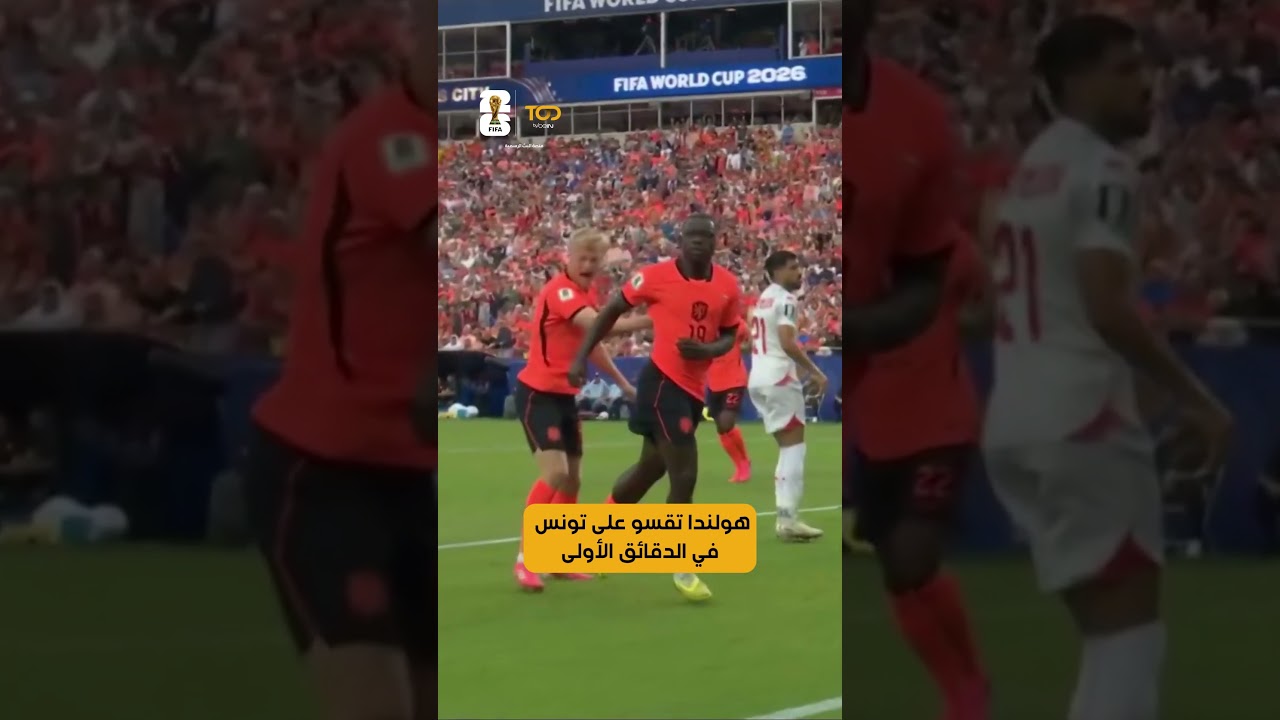
The Importance of a Fast Start: Netherlands vs. Tunisia
In the dynamic world of international football, the opening minutes of any match can often dictate the entire narrative. A recent captivating encounter saw the Netherlands assert significant pressure and exhibit early dominance against Tunisia, creating an electric atmosphere for fans of both teams. This fixture, whether a crucial qualifier or a high-stakes friendly, provided invaluable insights into the tactical approaches and mental fortitude of both national squads, particularly as they look towards major tournaments like the FIFA World Cup.
The Netherlands, a nation synonymous with fluid attacking football and tactical innovation, showcased their pedigree by establishing a formidable presence from the first whistle. This early onslaught not only challenged Tunisia’s resolve but also underlined the Oranje's ambition and preparedness on the global stage. For Tunisia, known for their resilience and tactical discipline, navigating such an intense opening period offers crucial lessons for future performances against top-tier European opposition.
This article delves deep into the implications of such an early display, exploring the tactical nuances, player performances, and the broader context this match holds for both teams as they continue their respective journeys in international football. From the strategic brilliance that enabled the Dutch to gain an early foothold to the spirited efforts of the Tunisian side to adapt and respond, we unpack the key takeaways from this memorable clash, offering a comprehensive football analysis that goes beyond just the highlights.
The Narrative of Early Dominance: Netherlands Takes Control
The term "early dominance" in football often conjures images of relentless attacking waves, midfield superiority, and a tangible shift in momentum from the outset. In this particular encounter between the Netherlands and Tunisia, the narrative was firmly established in the opening stages. The Dutch side appeared to implement a strategy designed to overwhelm their opponents, employing a high press and fluid positional play that made it challenging for Tunisia to settle into their rhythm.
Such an opening can be attributed to several factors: meticulous pre-match preparation, a clear tactical blueprint, and the individual brilliance of players executing their roles with precision. The Netherlands demonstrated an ability to control the tempo, dictate play, and force Tunisia into defensive positions, effectively limiting their opportunities to launch counter-attacks or build from the back. This early ascendancy can significantly impact the psychology of a match, potentially leading to increased confidence for the dominant side and demanding immense mental resilience from the team under pressure.
While specific details of goals or definitive outcomes remain unstated, the very nature of "early dominance" suggests a period where the attacking team creates several dangerous situations, puts the opposition's goalkeeper and defense under severe scrutiny, and potentially secures a valuable early lead. This sets a precedent for the rest of the game, compelling the trailing or pressured team to reassess their approach and potentially take more risks. The vibrant highlights from this period would undoubtedly feature intricate passing sequences, incisive runs, and perhaps crucial saves or defensive blocks that shaped the early phase of the contest. It's these standout actions and key moments that captivate fans and provide rich material for football analysis.
For football fans, witnessing a team perform with such intensity from the kick-off is a testament to their readiness for the highest levels of competition, whether it's the Champions League, Premier League, LaLiga, Serie A, Bundesliga, Ligue 1, or ultimately, the FIFA World Cup.
International Football Stage: FIFA World Cup Aspirations and Preparations
Every international match, regardless of its official designation, carries significant weight for national teams, especially when the FIFA World Cup approaches. This encounter between the Netherlands and Tunisia serves as a vital benchmark for both nations, offering a platform to test strategies, evaluate player form, and build team cohesion against diverse opposition. For a team like the Netherlands, consistently aiming for glory at the FIFA World Cup, these matches are critical for fine-tuning their tactical approach and ensuring their squad is primed for the demands of tournament football.
If this was a FIFA World Cup group stage match, the early dominance would be even more impactful. An early lead or a strong initial showing can set the tone for a team's entire tournament, providing crucial goal difference advantages and psychological momentum. For Tunisia, a nation that has demonstrated its capability to compete on the world stage, facing a European powerhouse like the Netherlands provides invaluable experience. It's an opportunity to gauge their defensive resilience, test their counter-attacking potential, and identify areas for improvement against top-tier opponents.
Even as a friendly fixture, the stakes remain high. Coaches use these games to experiment with different lineups, formations, and tactical adjustments. For players, it's a chance to impress the national team coach, cement their place in the starting eleven, and gain valuable international caps. The insights gained from a performance marked by early dominance can shape preparations for the FIFA World Cup 2026, influencing everything from training regimes to player selections.
Ultimately, these international football matches are more than just games; they are crucial components of a national team's journey towards achieving their ambitions, whether that's qualifying for the next FIFA World Cup, making a deep run in a continental championship, or simply developing a stronger squad for the future. The spotlight on these international football highlights is always intense, providing rich material for football news and football analysis worldwide.
Unpacking the Strategies: How the Netherlands Achieved Early Control
The Netherlands' ability to establish early dominance against Tunisia speaks volumes about their tactical acumen and disciplined execution. Typically, a side achieving such an early foothold employs a combination of high-intensity pressing, rapid ball circulation, and intelligent off-the-ball movement. The Dutch system, often characterized by its flexibility and emphasis on technical proficiency, likely saw them exploit spaces, create numerical advantages in key areas, and push Tunisia deep into their own half.
Netherlands' Tactical Approach:
- High Pressing System: Disrupting Tunisia's build-up play from the defensive third, forcing turnovers in dangerous areas. This can lead to quick opportunities and prevent the opponent from gaining confidence.
- Fluid Attacking Movements: Forwards and attacking midfielders interchange positions frequently, creating confusion for the Tunisian defense. This could involve wingers cutting inside, full-backs overlapping, and central midfielders making late runs.
- Midfield Control: Dominating the central areas, ensuring quick recovery of possession and efficient distribution. This allows the Dutch to sustain attacks and limit Tunisia's possession.
- Set-Piece Threat: Maximizing opportunities from corners and free-kicks, adding another dimension to their early attacking prowess.
For Tunisia, the challenge posed by such an aggressive start would have been immense. Their primary focus would likely have shifted from their own offensive plans to containing the Dutch threat and weathering the storm. This could involve dropping deeper, forming a compact defensive block, and relying on rapid transitions for any relief.
Tunisia's Potential Responses:
- Defensive Solidity: Prioritizing a robust defensive structure to deny space and minimize clear-cut chances. This often means sacrificing offensive impetus in the initial phases.
- Counter-Attacking Focus: Looking to exploit any spaces left by the high-flying Dutch attack, relying on pace and direct play to release pressure.
- Midfield Battle: Attempting to disrupt Dutch rhythm in the central park, even if it means employing more physical or attritional tactics.
- Goalkeeper & Defenders: The early moments would heavily rely on the individual performances of Tunisian defenders and their goalkeeper to repel attacks and maintain composure.
The tactical battle in the opening phase of such a match is often a chess game, with each team attempting to impose its will. The Netherlands' success in establishing early control points to superior execution of their game plan and an inherent understanding among their players. This level of tactical sophistication is what separates top international teams and is always a key focus in any comprehensive football analysis for tournaments like the FIFA World Cup.
Architects of Dominance: Key Player Roles in International Football
While we cannot name specific players from this particular match, we can explore the types of players who would typically shine in a scenario where a team like the Netherlands establishes early dominance. These individuals are often the linchpins of their respective teams, capable of influencing the game's flow and creating critical moments.
For the Netherlands (The Dominant Force):
-
★
The Creative Midfielder: Often the orchestrator, dictating tempo, spraying passes, and unlocking defenses with vision. Their ability to control the midfield battle is paramount to sustaining pressure and creating chances.
-
★
The Clinical Forward: The focal point of the attack, responsible for converting chances that arise from the team's early pressure. Their movement, positioning, and finishing ability are crucial for an early lead.
-
★
The Overlapping Full-Backs: Providing width and attacking impetus, they stretch the opponent's defense and deliver dangerous crosses, contributing significantly to the offensive overload.
-
★
The Commanding Centre-Back: Even when dominant, a strong defensive presence is vital to snuff out rare counter-attacks and ensure tactical stability, allowing the rest of the team to push forward confidently.
For Tunisia (The Resilient Challengers):
-
★
The Goalkeeper: Often the busiest player in the opening stages when under pressure. Crucial saves and confident handling can prevent an early capitulation and inspire the defense.
-
★
The Defensive Midfielder: Tasked with shielding the back four, breaking up play, and initiating any counter-attacks. Their work rate and tactical discipline are vital in absorbing pressure.
-
★
The Energetic Winger/Striker: Even when defending, having a pacy outlet upfront is crucial for creating moments of relief and posing a threat on the break, forcing the opponent to remain vigilant defensively.
-
★
The Leader in Defense: A central defender who can organize the backline, communicate effectively, and make crucial clearances or blocks under intense pressure.
These player archetypes highlight that every role on the pitch becomes magnified in importance during moments of early match dominance. Individual battles and moments of brilliance or resilience collectively shape the early narrative of a game, making for compelling football highlights and detailed football analysis.
Defining the Match: Standout Actions and Pivotal Turning Points
Every football match is a tapestry woven from a series of key moments, and an early dominant display is particularly rich with such instances. For the Netherlands, their early control would have been punctuated by several standout actions that underscored their superiority and perhaps broke down Tunisia's initial resolve. These aren't necessarily just goals, but rather crucial events that collectively build the narrative of a match.
Potential Key Moments for Netherlands:
-
✓
Early Attacking Forays: A sequence of quick passes leading to a dangerous shot, signaling the Dutch intent from the very first minute. These initial threats often dictate how the opposing defense sets up.
-
✓
Midfield Interceptions: Timely tackles or interceptions in the midfield battle that immediately transition defense into attack, catching Tunisia off guard and allowing the Netherlands to recycle possession quickly and launch fresh assaults.
-
✓
Goalkeeper Tested: A powerful shot on target forcing a spectacular save from the Tunisian goalkeeper, even if not a goal, these moments illustrate the intense pressure and create valuable footage for football highlights.
-
✓
First Goal: If the early dominance culminated in a goal, it would be the ultimate key moment, validating the tactical approach and putting the Dutch firmly in control. This changes the entire dynamic of the game, forcing Tunisia to chase.
Conversely, Tunisia's key moments would be defined by their ability to withstand the pressure and respond. Their resilience in the face of an early onslaught would also be integral to the match's narrative.
Potential Key Moments for Tunisia:
-
★
Crucial Defensive Blocks/Clearances: Last-ditch efforts to deny clear goal-scoring opportunities, showcasing the determination and organization of their backline under severe pressure.
-
★
Breakaway Counter-Attack: A moment of individual brilliance or a well-executed counter that offered a glimpse of their attacking potential, even if it didn't result in a goal, it would serve as a warning to the Dutch.
-
★
Midfield Stability Regained: A period where Tunisia managed to hold onto possession for longer spells, breaking the Dutch rhythm and asserting some control in the central areas.
These are the individual pieces that, when stitched together, form a compelling narrative of a match. Analyzing these football highlights allows journalists and fans alike to understand the shifts in momentum, the effectiveness of tactical decisions, and the resilience of the players on the field. Such detailed football analysis is crucial for understanding performances in prestigious competitions like the FIFA World Cup or the Champions League.
The Cruciality of the Opening Act: Insights from Football Experts
Football experts and analysts universally underscore the significance of the game's opening phase, especially in high-stakes international football encounters. The ability to dictate play and establish dominance from the first whistle is often seen as a hallmark of a truly prepared and confident team. In the context of a match like Netherlands vs. Tunisia, an early show of strength by the Dutch would undoubtedly draw praise for its tactical execution and psychological impact.
"In modern football, especially at the international level and in tournaments like the FIFA World Cup, taking control in the early minutes isn't just about scoring; it's about imposing your will, disrupting the opponent's game plan, and building crucial momentum. A fast start can deflate an opposing team's confidence and force them into reactive mode, which is exactly what top coaches aim for. It creates a psychological advantage that can last for the entire 90 minutes."
— A seasoned football analyst
Experts often point out that an early goal or sustained pressure compels the team under siege to deviate from their initial strategy. For Tunisia, this could mean abandoning a planned defensive solidity for a more open approach to chase the game, potentially exposing them further. Conversely, for the Netherlands, an early advantage allows them the luxury of managing the game, conserving energy, and potentially experimenting with different tactical schemes as the match progresses.
The physical and mental demands of reacting to an early setback are immense. A team that starts strongly demonstrates not only technical skill but also a high level of mental sharpness and collective understanding. This is vital for any side aspiring to compete in the FIFA World Cup 2026, where every match is a battle for points and pride. The capacity to translate pre-match preparations into immediate on-field dominance is a clear indicator of a well-drilled and confident squad.
Analyzing these early phases provides crucial insights for football news and football analysis, helping to predict future performances and identify potential challengers in major competitions like the Champions League, Premier League, LaLiga, Serie A, Bundesliga, and Ligue 1. The initial moments of a game are rarely insignificant; they are often the most telling.
Implications for the Future: Road to the FIFA World Cup 2026 and Beyond
The outcome and manner of this encounter between the Netherlands and Tunisia carry significant implications for both nations as they look towards future challenges, particularly the FIFA World Cup 2026. For the Netherlands, an early dominant performance serves as a powerful validation of their current squad depth, tactical philosophy, and overall readiness for elite competition. This result, especially if it indicates a strong attacking display and defensive solidity, will undoubtedly boost morale and reinforce confidence within the camp.
Netherlands' Path Forward:
- Confidence Boost: A strong start against international opposition enhances team belief and psychological readiness for high-pressure situations in the FIFA World Cup.
- Tactical Validation: Confirms that their attacking strategies and pressing game are effective against diverse opponents, providing valuable data for coaches.
- Player Form: Highlights individual players who are in excellent form, potentially solidifying their positions in the starting XI for upcoming qualifiers or FIFA World Cup 2026 matches.
- Message to Rivals: A dominant display sends a clear message to other top international football nations about their capabilities and aspirations for global tournaments.
For Tunisia, while facing early dominance can be a challenging experience, it provides invaluable learning opportunities. Such matches expose areas where improvements are needed, particularly in defensive organization, midfield resilience, and the ability to transition quickly from defense to attack under pressure. The insights gained are crucial for their development and preparations for tournaments like the Africa Cup of Nations and subsequent FIFA World Cup qualifiers.
Tunisia's Key Learnings:
- Defensive Adjustments: Identifying weaknesses in resisting high pressure and implementing tactical changes to improve defensive solidity from the start of games.
- Midfield Battle: Strategies to better contest central midfield, preventing opponents from dictating tempo and creating chances through the middle.
- Mental Fortitude: Developing the resilience to recover from early setbacks and maintaining composure under sustained pressure in international football.
- Counter-Attacking Efficiency: Refining their ability to capitalize on limited opportunities, transforming defensive efforts into dangerous offensive breaks.
Both teams will undoubtedly dissect the football highlights and full match footage with their coaching staff, conducting thorough football analysis to refine their strategies. The journey to the FIFA World Cup 2026 is long and arduous, filled with numerous qualifiers and preparatory matches. Every performance, especially those marked by significant moments, contributes to the overall development and readiness of a national squad. This match serves as a crucial data point in their respective narratives, underlining the constant evolution required to compete at the pinnacle of international football.
FIFA World Cup NOOR continues to bring you the latest football news, insights, and comprehensive match reports from around the globe, covering not just the World Cup but also the Champions League, Premier League, LaLiga, Serie A, Bundesliga, and Ligue 1.
Relive the Action: Netherlands vs. Tunisia Football Highlights
Experience the standout action and key moments from this captivating international clash. Watch the highlights and see the early dominance unfold.
A glimpse into the decisive early stages of the match.
Further Visuals: A Closer Look at the Action
Capturing a dynamic moment from the intense international encounter.
Frequently Asked Questions (FAQ) about International Football and Match Analysis
Q1: Why is early dominance so crucial in international football matches?
A1: Early dominance is vital because it allows a team to dictate the tempo, impose their tactical will, and potentially secure an early lead, which provides a significant psychological advantage. It forces the opponent to react rather than execute their own game plan, often leading to tactical adjustments and increased pressure. For tournaments like the FIFA World Cup, an early goal can also impact goal difference, which might be crucial for group stage progression.
Q2: How do teams like the Netherlands typically achieve early control in a match?
A2: Teams renowned for early control, such as the Netherlands, often achieve this through a combination of high-intensity pressing, fluid attacking movements, strong midfield possession, and quick transitions. They aim to disrupt the opponent's build-up, win the ball back high up the pitch, and immediately launch attacks, overwhelming the defense before they can settle into their rhythm. This requires excellent physical conditioning and tactical awareness.
Q3: What challenges does an early dominant opponent pose for a team like Tunisia?
A3: For a team like Tunisia, facing an early dominant opponent presents several challenges, including maintaining defensive discipline under intense pressure, preventing early goals, and finding ways to relieve pressure and launch their own attacks. It requires immense mental fortitude, tactical flexibility, and often relies heavily on the goalkeeper and central defenders to make crucial interventions. Adapting to the opponent's tempo and finding spaces for counter-attacks become critical.
Q4: How do international friendlies or preparatory matches contribute to FIFA World Cup readiness?
A4: International friendlies and preparatory matches are crucial for FIFA World Cup readiness as they allow national teams to test tactical formations, evaluate player performances against varied opposition, build team cohesion, and experiment with different strategies without the immediate pressure of qualification points. They provide invaluable feedback for coaches to fine-tune their squads and game plans, identify strengths and weaknesses, and ensure players are acclimatized to the demands of international football before a major tournament like the FIFA World Cup 2026.
Q5: Where can I find more in-depth football analysis and news for top leagues?
A5: For comprehensive football analysis, the latest football news, match highlights, and detailed coverage of top leagues like the Champions League, Premier League, LaLiga, Serie A, Bundesliga, Ligue 1, and the FIFA World Cup, independent football magazines like FIFA WORLD CUP NOOR are excellent resources. They offer expert insights, tactical breakdowns, and up-to-date information on international football and major club competitions worldwide.
About FIFA WORLD CUP NOOR: Your Ultimate Football Magazine
FIFA WORLD CUP NOOR is your premier independent football magazine, dedicated to providing unparalleled coverage and insightful football analysis from across the globe. We delve deep into the beautiful game, offering expert opinions, detailed match reports, and the latest football news that keeps you at the heart of the action.
Our passionate team of journalists and analysts covers every angle of the sport, with a special focus on the grandeur of the FIFA World Cup, including exclusive content on the road to World Cup 2026. Beyond international football, we bring you in-depth reports and football highlights from the most prestigious club competitions, ensuring you never miss a beat from:
- • Champions League
- • Premier League
- • LaLiga
- • Serie A
- • Bundesliga
- • Ligue 1
Join the global community of football enthusiasts who trust FIFA WORLD CUP NOOR for their daily dose of high-quality football content. From tactical breakdowns to player spotlights and comprehensive football match analysis, we are your go-to source for everything football, soccer, and sports.
Explore More Football Content
Labels: football, soccer, sports, highlights, international football, FIFA World Cup, FIFA World Cup 2026, Football News, Football Analysis, Football Magazine, Football Match Analysis, Champions League, Premier League, LaLiga, Serie A, Bundesliga, Ligue 1
Hashtags: #football #soccer #highlights #sports #FIFAWorldCup #FIFAWorldCup2026 #FootballNews #FootballAnalysis #InternationalFootball #FootballMagazine #ChampionsLeague #PremierLeague #LaLiga #SerieA #Bundesliga #Ligue1
© 2026 FIFA WORLD CUP NOOR. All rights reserved.


No comments:
Post a Comment