


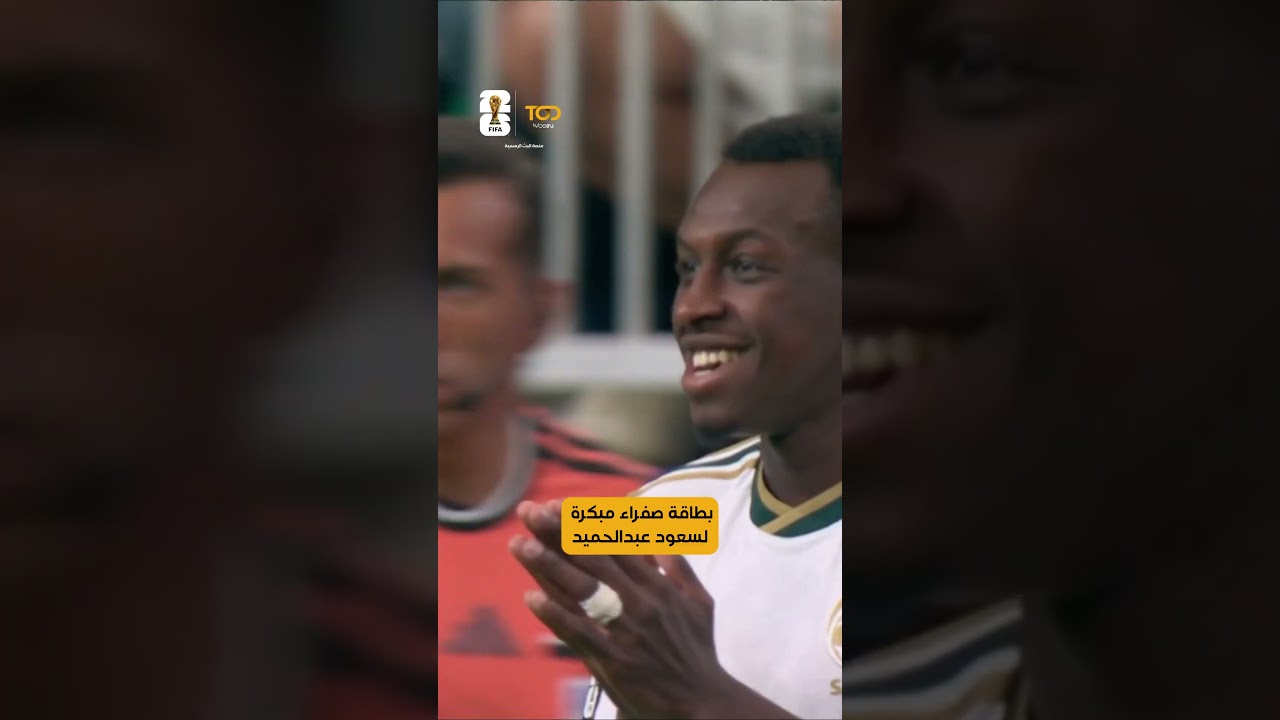
The Crucial Early Yellow: Saud Abdulhamid and the Tactical Ripple Effect
Analyzing the profound impact of an early booking on a player's strategic approach, team dynamics, and the overall flow of a major football encounter.
Introduction: The Weight of an Early Warning in Football
In the exhilarating world of international football, where every pass, tackle, and decision can swing the momentum of a game, certain moments hold disproportionate weight. One such instance is an early yellow card, an event that can dramatically alter a player's approach, a team's tactical blueprint, and the overall narrative of a high-stakes encounter. This article delves into the significant implications of Saud Abdulhamid receiving an early booking, analyzing how such a seemingly isolated event can ripple through the entire match, affecting everything from defensive solidity to offensive freedom. For fans of FIFA World Cup action, football news, and in-depth football analysis, understanding these nuances is key to appreciating the beautiful game at its highest level.
Saud Abdulhamid, a prominent figure in modern football, found himself in this challenging position. An early caution from the referee places immense psychological and tactical pressure on any player, especially a defender operating in critical areas of the pitch. We will explore the immediate and long-term consequences within the context of competitive football, examining how players like Abdulhamid must adapt their game under such scrutiny. This incident provides a rich subject for football match analysis, offering insights into the mental toughness required and the strategic adjustments demanded from both the individual and the coaching staff. This level of detail is paramount for anyone following the FIFA World Cup 2026, Champions League, Premier League, LaLiga, Serie A, Bundesliga, or Ligue 1.
Match Overview: Navigating the Dynamics of a Competitive Encounter
While specific details of the match in question remain unstated, the general context of any competitive football fixture sets the stage for moments like Saud Abdulhamid's early yellow card. Modern football, particularly at the elite level witnessed in the FIFA World Cup and major European leagues, is characterized by relentless intensity, physical duels, and razor-sharp tactical battles. From the opening whistle, teams strive to assert dominance, control possession, and create scoring opportunities, all while maintaining defensive discipline. The stakes are perpetually high, with points, progression, and pride on the line in every fixture, whether it’s a group stage clash in the FIFA World Cup 2026 or a crucial derby in the Premier League.
In such an environment, the initial minutes are often frantic, a period where players try to stamp their authority on the game, gauge their opponents' strengths, and settle into their rhythm. This opening phase is ripe for mistimed tackles, over-eagerness, or tactical fouls designed to disrupt an opponent's flow. An early yellow card, delivered by the referee, serves as an immediate and unequivocal warning. It's a signal that the match officials will not tolerate breaches of the rules and that players must maintain composure and adherence to fair play from the very outset. This enforcement of discipline shapes the psychological landscape of the game, not just for the cautioned player but for both teams, as they factor this new variable into their ongoing strategies. These critical moments often feature prominently in football highlights, showcasing the fine margins of success and failure.
The incident involving Abdulhamid underscores the constant pressure on players to perform at their peak while staying within the confines of the rules. A moment of misjudgment or an aggressive challenge can carry significant repercussions, altering personal performance trajectories and team dynamics for the duration of the match. Such events become central to any comprehensive football analysis, shedding light on the intricate balance between aggression and control that defines top-tier international football.
Competition Context: Discipline on the Grandest Stages
The significance of an early yellow card, particularly for a player like Saud Abdulhamid, is amplified when considering the competitive landscape in which it occurs. Whether it's the intense pressure of the FIFA World Cup, the unforgiving knockout rounds of the Champions League, or a pivotal fixture in domestic leagues such as the Premier League, LaLiga, Serie A, Bundesliga, or Ligue 1, player discipline is paramount. In these environments, every decision by the referee is scrutinized, and every card can have profound implications, not just for the ongoing game but for a team's entire campaign. The FIFA World Cup 2026, for example, will undoubtedly feature countless such moments that define legacies.
In tournament football, the accumulation of yellow cards can lead to suspensions, forcing key players to miss crucial matches. An early booking in a group stage game might not immediately remove a player from the current match, but it places them on a tightrope for subsequent fixtures. For a defender like Abdulhamid, who is often involved in high-pressure defensive actions, this risk is especially pronounced. The coach must then weigh the tactical necessity of keeping such a player on the field against the potential cost of a second yellow card, which would result in an immediate sending-off and leave the team at a numerical disadvantage. This strategic dilemma is a common subject in football analysis and international football discussions.
The context of the competition also dictates the opponent's reaction. A shrewd opposing coach might instruct their players to target the cautioned player, provoking further fouls or exploiting any perceived reduction in defensive aggression. This psychological warfare is a hallmark of elite sports, and an early yellow card provides a clear target. Teams are always seeking any advantage, and a player treading a disciplinary tightrope can certainly offer one. Understanding these dynamics is crucial for anyone following football news and football highlights, as it provides a deeper appreciation of the strategic battles unfolding on the pitch. The tactical chess match that ensues after an early card is a testament to the depth and complexity of modern football.
The stakes are incredibly high, and the world stage of international football demands not only exceptional skill but also unwavering mental fortitude. Players must be able to perform under the immense pressure of potential disciplinary action, maintaining their defensive responsibilities without crossing the line into recklessness. This makes moments like Abdulhamid's early yellow card not just isolated incidents but integral parts of the broader narrative of a competition.
Tactical Analysis: Reshaping the Game Plan
From a tactical perspective, an early yellow card for a key defender like Saud Abdulhamid necessitates immediate and profound adjustments from the coaching staff. Abdulhamid typically operates as a right-back, a position that requires a delicate balance of defensive solidity and attacking impetus. Modern full-backs are expected to contribute significantly in both halves of the pitch, making surging runs down the flank, delivering crosses, and engaging in pressing high up the field. However, with a yellow card hanging over his head, Abdulhamid's natural inclination to be aggressive in tackles or to commit tactical fouls to break up play must be severely curtailed. This is a critical aspect of football match analysis.
The primary tactical implication is a potential reduction in defensive aggression. A player with a yellow card will often hesitate before committing to a strong challenge, particularly near the penalty box or in wide areas where fouls can lead to dangerous set-piece opportunities. This hesitation can create small windows of opportunity for opposing attackers, allowing them more space or time on the ball. Opponents, especially those with quick, skillful wingers, will likely try to exploit this vulnerability by consistently attacking Abdulhamid’s flank, aiming to draw another foul. This strategic targeting becomes a significant theme in the football analysis of the game.
"An early yellow card for a full-back isn't just a personal warning; it's a strategic warning to the entire team. It dictates a more cautious approach, alters pressing schemes, and can inadvertently open up crucial channels for the opposition to exploit. The coach's ability to adapt quickly becomes paramount."
Furthermore, the team's overall defensive shape and pressing strategy might need modification. If Abdulhamid is less able to press high or engage aggressively, the central midfielders or wingers on his side may need to provide additional cover, potentially compromising their own attacking roles. This shifting of responsibilities can disrupt the team's carefully planned structure. The coach might consider a substitution earlier than planned if Abdulhamid seems unable to adapt, or if the risk of a second yellow becomes too high, impacting the allocation of available substitutions later in the game. These are the intricate details that captivate fans of FIFA World Cup and Champions League tactical battles.
In terms of attacking contributions, Abdulhamid might also be less willing to embark on daring overlaps or engage in attacking duels where losing possession could lead to a quick counter-attack and a desperate, risky tackle. The balance between defensive solidity and attacking impetus is crucial for full-backs, and a yellow card can skew this balance heavily towards caution. This deep dive into tactical implications is what sets comprehensive football news and football analysis apart.
Player Spotlight: Saud Abdulhamid – The Mental Game After a Card
Saud Abdulhamid represents the modern archetype of a dynamic full-back, known for his robust defending, intelligent positioning, and ability to contribute significantly to the team's attacking phases. As a key player for his club and country in international football, his presence on the pitch is often vital for both defensive stability and offensive width. However, receiving an early yellow card tests a player's mental fortitude and experience like few other situations. It transforms the match into a psychological battle within the physical contest.
The immediate challenge for Abdulhamid is to adjust his game without diminishing his effectiveness. He must continue to engage in defensive duels, make crucial interceptions, and track opposing wingers, all while avoiding any action that could be deemed a bookable offense. This requires heightened concentration and refined decision-making. Every subsequent challenge is evaluated not just for its necessity but also for its risk of incurring a second yellow, which would lead to an early exit and leave his team a man down. This is the tightrope walk that defines a player's performance under caution in the FIFA World Cup or any major tournament.
Challenges for a Cautioned Player:
- Reduced Aggression: Balancing the need to win the ball with the fear of committing another foul.
- Mental Fatigue: The constant awareness of the yellow card adds a layer of mental strain.
- Targeted by Opponents: Opposing players may actively try to provoke a second foul.
- Restricted Attacking Play: Hesitation to commit forward in case of losing possession and needing to make a recovery tackle.
Players of Abdulhamid's caliber are expected to demonstrate maturity and tactical intelligence in such scenarios. They learn to make smarter challenges, position themselves more effectively to intercept rather than tackle, and communicate with their teammates to ensure adequate cover. This experience, gleaned from navigating high-pressure situations in the Premier League, LaLiga, or Champions League, is invaluable. The ability to complete a match with a yellow card and still contribute positively speaks volumes about a player's professionalism and understanding of the game. It's an often-unsung skill that contributes significantly to football highlights.
Ultimately, an early yellow card for Saud Abdulhamid is not just a disciplinary mark; it’s a crucible for his character and skill. It forces him to play a more calculated game, demonstrating his ability to influence the match under significant constraints, a testament to the comprehensive football analysis required to truly appreciate such a situation.
Key Moments: Navigating the Aftermath of an Early Booking
Following Saud Abdulhamid’s early yellow card, the subsequent moments in the match become crucial battlegrounds where the card's ripple effects truly manifest. While we cannot invent specific in-game occurrences, the general patterns observed in football highlights and tactical analysis after such an incident are highly predictable. These are the "standout action and key moments" that define how a player and team cope with this disciplinary setback.
One of the first key moments often involves the player's immediate reaction to subsequent defensive situations. Will Abdulhamid continue to press high, or will he drop deeper, choosing safer positions? The types of challenges he attempts will be telling. Instead of aggressive slide tackles, we might expect more standing tackles, body shielding, or attempts to shepherd the opponent away from dangerous areas. A successful, clean tackle after a yellow card is not just a defensive win; it’s a psychological triumph, demonstrating control and composure. Conversely, a mistimed challenge, even if not leading to a second yellow, can send jitters through the team and further embolden the opposition.
Highlight Card: Adapting Under Pressure
Observing a player like Abdulhamid navigate a game with an early yellow card is a masterclass in adaptation. Every defensive movement, every duel, every tactical decision is magnified. Key moments often include:
- 1 Calculated Interceptions: Opting for position over power to regain possession safely.
- 2 Team Communication: Increased dialogue with central defenders and midfielders for cover.
- 3 Smart Recovery Runs: Prioritizing getting back into position rather than making desperate, risky challenges.
- 4 Limited Attacking Ventures: Measuring offensive contributions against defensive security.
Another critical aspect involves the opposition's response. Do they actively try to isolate Abdulhamid, sending multiple players down his wing? Do they attempt to draw fouls by dribbling close to him or creating situations where he might be forced into a risky challenge? How Abdulhamid and his teammates collectively thwart these attempts becomes a fascinating subplot. Strong communication and disciplined cover from central defenders and midfielders are essential to negate the opponent's strategy. This is the kind of detailed observation that enriches football news and international football coverage.
Finally, key moments might also involve crucial attacking contributions made by Abdulhamid despite his inhibited state. A perfectly timed cross, a decisive pass, or a rare but impactful run forward could demonstrate his ability to still influence the game positively, showcasing resilience and tactical awareness. These moments underscore the mental strength required to perform at the highest level in competitions like the FIFA World Cup and major European leagues.
Expert Opinion: The Coach's Conundrum and Player Psychology
From the perspective of an experienced football strategist, an early yellow card for a player of Saud Abdulhamid's importance presents a multifaceted challenge. The immediate concern for the coaching staff is to assess whether the player can continue to operate effectively without risking a sending-off. This isn't merely about individual discipline; it's about the team's structural integrity and tactical balance. The coach must decide whether to instruct Abdulhamid to temper his aggression, potentially sacrificing some defensive bite, or to consider a substitution to avoid playing with ten men. This delicate balance is a prime subject for football analysis.
★ The Coaching Dilemma ★
"An early yellow card for a crucial player like Abdulhamid creates a strategic fork in the road. Does the coach trust the player's discipline to see out the game, knowing the opposition will target him, or does he make a proactive substitution? Both carry significant risks and define the narrative of the match."
This decision is influenced by various factors: the player's experience, the perceived bias of the referee, the tactical importance of the player, and the strength of the available substitutes. It highlights the profound impact of single moments on the broader strategic flow of FIFA World Cup or Champions League football.
Psychologically, the referee's decision has an immediate effect. The cautioned player often feels a heightened sense of scrutiny and pressure. This can lead to a more conservative style of play, but it can also, paradoxically, make a player more prone to errors if they overthink their actions. The best players, however, possess the mental resilience to compartmentalize this pressure, focusing solely on their defensive tasks and contributing to the team without incurring further disciplinary action. Their ability to manage this internal battle is as crucial as their technical skill. This is a core component of understanding player performance in any football magazine.
For the opposing team, an early yellow card is an invitation. Their attackers will be instructed to run at Abdulhamid, attempting to isolate him and provoke another foul. The referee's early warning sets a precedent, and subsequent challenges by the cautioned player will be judged with a sharper lens. This creates a dynamic where the opposing side gains a psychological edge, aiming to exploit the situation both tactically and mentally. These are the intricate mind games that play out in top-tier international football.
Furthermore, the communication between the coach and the cautioned player is vital. A calm, clear message from the touchline can help the player regain focus and understand the required adjustments. This expert guidance is essential in high-pressure tournaments like the FIFA World Cup 2026, where every minor detail can influence the outcome. The expert opinion consistently underscores that these moments are not just about the foul itself, but about the entire ecosystem of reactions, adaptations, and strategic shifts that follow.
Looking Ahead: The Broader Implications for Player and Team
An early yellow card, such as the one received by Saud Abdulhamid, extends its influence far beyond the ninety minutes of the immediate match. In the grand scheme of football tournaments and league campaigns – from the FIFA World Cup to the demanding schedules of the Premier League, LaLiga, Serie A, Bundesliga, and Ligue 1 – disciplinary records play a significant role. The accumulation of yellow cards can lead to suspensions, forcing players to miss critical upcoming fixtures. For a national team in the FIFA World Cup 2026, or a club chasing Champions League glory, losing a key player due to card accumulation can be devastating.
For Abdulhamid personally, this incident adds to his disciplinary slate for the competition. It means he must navigate subsequent matches with an even greater degree of caution, knowing that another booking would lead to a suspension. This persistent threat can subtly alter a player's long-term performance, making them slightly less aggressive, which might impact their overall effectiveness. However, it can also be a catalyst for growth, forcing a player to develop more sophisticated defensive techniques, relying more on positioning and anticipation rather than brute force. This growth under pressure is a common narrative in football news.
From a team management perspective, coaches will have to closely monitor Abdulhamid's card situation as the tournament or season progresses. This might influence future team selections, especially if the team faces a series of crucial matches. The tactical planning for upcoming games would need to consider the potential absence of Abdulhamid, requiring contingency plans and perhaps giving other players opportunities. This depth of preparation is what separates successful teams in international football.
Beyond the Immediate Game:
- Suspension Risk: Accumulation of cards can lead to missing crucial future matches.
- Player Development: Forces a player to refine defensive skills and decision-making.
- Squad Depth Management: Coaches must consider alternatives and squad rotation.
- Strategic Impact: Influences long-term tactical planning and team selections.
Ultimately, an early yellow card is a moment of challenge and potential growth. It tests a player's mental strength, a coach's tactical flexibility, and a team's collective resilience. Such moments, often highlighted in football highlights, contribute significantly to the rich tapestry of football analysis, demonstrating that even seemingly small events can have far-reaching consequences in the high-stakes arena of international football and club competitions.
Watch the Key Moment: Abdulhamid's Early Caution
A Closer Look at the Action
A detailed perspective on the match context, emphasizing the moment of the early yellow card and its implications for international football.
Frequently Asked Questions (FAQ) about Football Discipline
► What does an early yellow card signify in football?
An early yellow card, issued by the referee, serves as a formal warning to a player for an infringement of the rules, such as a tactical foul, dissent, or unsporting behavior. It signifies that the player must proceed with extreme caution for the remainder of the match, as a second yellow card would result in a red card and immediate expulsion from the game. This can profoundly impact team dynamics and is a key aspect of football analysis.
► How does an early yellow card impact a player's performance?
It significantly impacts a player's performance by forcing them to adjust their game style. They may become less aggressive in challenges, prioritize positioning over tackling, and be more cautious in attacking ventures to avoid losing possession in dangerous areas. Psychologically, it adds pressure, requiring immense focus to maintain effectiveness without risking a second booking. This is especially true in high-stakes matches like those in the FIFA World Cup or Champions League.
► What tactical changes might a coach make after an early booking for a key player?
A coach might make several tactical adjustments. These include instructing the player to be less aggressive, assigning another player to provide additional defensive cover, or even considering an early substitution to prevent the risk of a red card. The team's pressing strategy might also be altered to reduce the cautioned player's exposure to one-on-one defensive situations. These strategic shifts are often highlighted in football news and post-match analyses.
► Can an early yellow card affect a team's performance in future matches?
Yes, absolutely. In many competitions, including the FIFA World Cup and various league tournaments (Premier League, LaLiga, Serie A, Bundesliga, Ligue 1), the accumulation of yellow cards leads to suspensions. An early yellow card puts a player closer to such a suspension, potentially forcing them to miss crucial future matches and impacting the team's squad depth and strategic planning. This is a critical factor in long tournament runs.
► How do opponents exploit a player who has received an early yellow card?
Opposing teams will often try to exploit a cautioned player by directing more attacks down their flank, attempting to isolate them in one-on-one situations. Their attackers might try to draw further fouls by dribbling aggressively or lingering near the cautioned player, hoping to provoke a second bookable offense. This strategic targeting is a common tactic in professional international football and is frequently covered in football highlights and tactical reviews.
About FIFA WORLD CUP NOOR
FIFA WORLD CUP NOOR is your premier independent football magazine, dedicated to providing unparalleled football news, insightful football analysis, and captivating football highlights from across the globe. We delve deep into the beautiful game, offering expert commentary and detailed reports that go beyond the headlines.
Our comprehensive coverage spans the most prestigious competitions in international football and club football, ensuring you stay informed and entertained:
- • FIFA World Cup & FIFA World Cup 2026
- • UEFA Champions League
- • Premier League
- • LaLiga
- • Serie A
- • Bundesliga
- • Ligue 1
- • And all other significant international football events
Join us for in-depth football match analysis, exclusive features, and the latest football news, all crafted with passion for the game.
Related Topics:
Popular Hashtags:


No comments:
Post a Comment