

FIFA World Cup Analysis
Badr Eddine El-Idrissi: Maradona's Memories and the 1982 World Cup's Unforgettable Surprises
An exclusive deep dive into the legendary Diego Maradona's early World Cup impact and the captivating narratives of the 1982 FIFA World Cup, illuminated by expert insights.
Author: FIFA WORLD CUP NOOR Editorial Team
Reading Time: 18-22 minutes
Publication Date: June 29, 2026
Introduction: Revisiting Football's Golden Eras
The FIFA World Cup, a tournament synonymous with legendary moments and unforgettable narratives, continually offers a rich tapestry for analysis and reflection. As anticipation builds for the FIFA World Cup 2026, revisiting past tournaments allows us to appreciate the game's evolution, the indelible mark left by its greatest stars, and the enduring power of its most surprising turns. This special article delves into an era often celebrated for its vibrant football and burgeoning talents, specifically casting a spotlight on the 1982 FIFA World Cup and the burgeoning genius of Diego Maradona.
In this exclusive feature, drawing from the insights of experts like Badr Eddine El-Idrissi, we embark on a journey through time. El-Idrissi, a seasoned voice from the beIN SPORTS studio, brings a unique perspective, sharing personal recollections of Maradona during his formative years on the global stage and dissecting the unexpected elements that made the 1982 tournament truly remarkable. It's a testament to the fact that football's past is never truly past; it continually informs our understanding of the present and shapes our expectations for the future of international football.
Join us as we explore the tactical nuances, the individual brilliance, and the sheer unpredictability that define the World Cup experience, filtered through the lens of a pivotal moment in football history. This is more than just a trip down memory lane; it's an essential piece of football news and analysis for any true aficionado of the beautiful game.
The 1982 FIFA World Cup: A Competitive Landscape
The 1982 FIFA World Cup, hosted by Spain, was a tournament of significant transition and memorable contests. Expanding to 24 teams for the first time, it offered a broader stage for nations from across the globe, enhancing its status as the pinnacle of international football. The competition was fierce, characterized by a blend of established footballing powers and emerging contenders, all vying for the ultimate prize.
Unlike a singular match report, our focus here is on the overarching narrative of the tournament as a whole, particularly in how it presented a young Diego Maradona to the global audience. Argentina arrived as the reigning champions from 1978, carrying the weight of expectation, not least because of their prodigious young playmaker. The tournament format itself, featuring two group stages before the knockout rounds, created an intricate web of challenges, demanding consistent performance and tactical adaptability from every squad.
European giants like West Germany, Italy, and France showcased their formidable structures and tactical discipline, while South American flair was epitomized not just by Argentina, but also by the mesmerising Brazil side, often lauded as one of the most aesthetically pleasing teams never to win the World Cup. These encounters, steeped in high stakes and national pride, provided a fertile ground for both anticipated heroics and unforeseen upsets, shaping a tournament that would be discussed for decades. The stage was set for a dramatic display of global football, with every pass, tackle, and shot contributing to the unfolding drama of the FIFA World Cup.
The journey through the 1982 competition revealed contrasting footballing philosophies, from the defensive solidity of some European teams to the attacking verve of others. It was a tournament where individual brilliance often clashed with collective strategy, creating a dynamic tension that captivated audiences worldwide and added layers to the rich history of the FIFA World Cup.
The Global Stage: Context of the 1982 FIFA World Cup
The 1982 FIFA World Cup was more than just a football tournament; it was a cultural phenomenon and a significant marker in the evolution of international football. Hosted in Spain, a nation re-emerging onto the global stage, the tournament benefited from a vibrant backdrop and an enthusiastic public. This edition saw the expansion from 16 to 24 teams, a pivotal moment that opened the door for more diverse footballing nations to participate, thereby broadening the global appeal and competitiveness of the FIFA World Cup.
At this point in history, football was rapidly globalizing, and the World Cup served as its most potent vehicle. The event attracted unprecedented viewership, cementing its status as a premier global sporting spectacle. From a footballing perspective, the tournament represented a fascinating blend of traditional powers and a new wave of talent. Italy, who would eventually lift the trophy, embodied resilience and tactical cunning, while teams like Brazil captivated with their artistry, even if success ultimately eluded them.
For Argentina, the defending champions, 1982 was a complex affair. The pressure to repeat their home triumph was immense, and all eyes were on their young talisman, Diego Maradona, making his FIFA World Cup debut. His inclusion in the squad at just 21 years old was a testament to his undeniable talent, even if the team's overall performance in this particular tournament would not mirror his later legendary achievements.
The socio-political context also played a subtle role. The Falklands War, occurring just months before the tournament, added an unforeseen layer of emotional weight for the Argentine team. While football often serves as an escape, it can also reflect deeper national sentiments, and the team's journey was undoubtedly viewed through this prism by many back home. This heightened emotional atmosphere contributed to the drama that unfolded on the pitches across Spain.
Overall, the 1982 FIFA World Cup stands as a landmark event: a moment when the tournament truly embraced its global destiny, showcasing diverse styles of play and paving the way for the larger, more inclusive World Cups of the future, including the highly anticipated FIFA World Cup 2026. It's a rich chapter in the annals of international football, offering invaluable insights into the game's past, present, and future.
Tactical Landscapes of the Early 80s: A Study in Contrasts
The early 1980s represented a fascinating period of tactical evolution in football. While the revolutionary tenets of 'Total Football' from the Netherlands had influenced many, the 1982 FIFA World Cup showcased a diverse array of approaches. Defensively, the zonal marking systems were gaining traction, often seen alongside man-marking strategies to contain individual threats. Teams were increasingly focused on midfield dominance, seeking to control the tempo of the game through clever passing and relentless pressing.
Italy's eventual triumph, for instance, underscored the enduring effectiveness of robust defending combined with incisive counter-attacking. Their legendary `Catenaccio` heritage, though modified, was still palpable in their disciplined organization and ability to nullify opposition attacks. In stark contrast, Brazil's aesthetically pleasing side, featuring talents like Zico, Sócrates, and Falcão, played an expansive, fluid game focused on overwhelming opponents with intricate passing and individual flair. Their approach, while breathtaking, sometimes left them vulnerable defensively, highlighting the eternal debate between attacking beauty and defensive solidity in football.
For Argentina, the defending champions, the tactical setup revolved significantly around their key players. While they possessed a strong collective unit, the expectation was that their attacking impetus would come from their star forwards and, increasingly, from the exceptional talent of Diego Maradona. However, integrating such a unique player, especially a young Maradona who was still developing his full potential and understanding of the international stage, within a rigid team structure could present its own challenges. Opponents knew the threat he posed and often deployed specific defensive schemes to limit his influence, employing tight marking and aggressive pressing whenever he received the ball.
The tactical battles of 1982 were often decided by how effectively teams could exploit spaces, transition between defense and attack, and manage the psychological pressures of the FIFA World Cup. From the disciplined structures of West Germany to the inventive play of France, the tournament was a rich learning ground for coaches and a spectacle for fans, laying some of the groundwork for the tactical innovations seen in later Premier League, LaLiga, Serie A, and Champions League football, and undoubtedly influencing strategies for the FIFA World Cup 2026.
These historical tactical analyses provide valuable context for understanding why certain outcomes occurred and how the game itself has evolved, continually shaping our perspective on modern football match analysis.
Player Spotlight: Diego Maradona's World Cup Debut
Diego Maradona. The name itself conjures images of unparalleled genius, breathtaking skill, and a force of nature unlike any other in football history. While his legendary status was cemented in the 1986 FIFA World Cup, the 1982 tournament marked his initial foray onto the global stage, a crucial chapter in his development from a prodigious talent into an undisputed icon. At just 21 years old, Maradona arrived in Spain with immense expectations, having already set the Argentine Primera División alight with Argentinos Juniors and Boca Juniors, and having won the FIFA World Youth Championship in 1979.
His presence was a major part of the football news surrounding the reigning champions, Argentina. Despite being omitted from the 1978 squad at the last minute, the world now had its chance to witness 'El Pibe de Oro' (The Golden Boy) at the senior FIFA World Cup. Maradona's style of play was already distinctive: an electrifying blend of close control, explosive dribbling, incredible balance, and a visionary passing range. He possessed a low center of gravity that allowed him to change direction rapidly, weaving through defenses with an almost gravitational pull on the ball.
In 1982, Maradona was still refining his game, learning how to navigate the intense physical demands and relentless marking strategies employed by opponents at the highest level. While his individual moments of brilliance were evident, he also experienced the harsh realities of top-tier international football, including being heavily targeted by defenders. His two goals in the tournament, both against Hungary in a decisive group stage victory, offered glimpses of the magic that would define his career.
However, the tournament also revealed the challenges of building a team around such a singular talent. Despite his best efforts, Argentina's journey ended in the second group stage, failing to progress against formidable opposition like Brazil and Italy. Maradona's frustration was palpable, culminating in a red card against Brazil, a testament to the immense pressure and emotional intensity he played under. This experience, while difficult, was formative, shaping his resolve and teaching him invaluable lessons about resilience and leadership that he would famously apply four years later.
His 1982 performance, though not his most triumphant, remains an integral part of the Maradona legend. It was the precursor to global domination, a demonstration of raw, unbridled talent on the biggest stage, foreshadowing the unparalleled FIFA World Cup highlights he would later create. It provides a unique perspective for football analysis, showing a legend in the making, facing adversity before achieving ultimate glory.
Key Moments: The Unpredictable Narrative of the 1982 World Cup
The 1982 FIFA World Cup was a tournament punctuated by numerous "surprises," living up to the essence of what makes international football so captivating. These moments weren't necessarily about unforeseen results in every game, but rather the unfolding of narratives that defied pre-tournament predictions and expectations. One of the earliest and most stunning upsets came when Algeria, making their World Cup debut, defeated the mighty West Germany in a group stage match, a result that sent shockwaves through the competition. This was a clear demonstration that underdog stories were not only possible but could shake the foundations of the established order in the FIFA World Cup.
Another significant surprise was the trajectory of Italy. Starting the tournament with three unconvincing draws in their initial group stage matches, they faced criticism and seemed far from contenders. Yet, under the guidance of Enzo Bearzot, they dramatically transformed their fortunes in the second group stage. Their stunning victory over the much-fancied Brazilian 'Dream Team' in one of the most iconic World Cup matches ever played (though we won't detail specific scores) was a monumental upset and a tactical masterclass. This match, in particular, highlighted the power of resilience and shrewd tactical planning over pure individual brilliance, captivating audiences and providing enduring football highlights.
The performance of the French team, often celebrated for their midfield maestros like Michel Platini, also surprised many with their deep run, reaching the semi-finals and playing some of the most attractive football of the tournament. Their dramatic semi-final encounter against West Germany, which extended into extra time and penalties, remains one of the FIFA World Cup's most memorable and controversial contests, filled with unexpected turns.
Beyond specific match outcomes, the overall competitive balance was a surprise. The expanded format meant that no team had an easy path, and every point was fiercely contested. The emotional intensity, especially for teams like Argentina navigating a challenging political backdrop, added another layer of unpredictability. The tournament was a stark reminder that in the FIFA World Cup, reputation alone guarantees nothing; spirit, strategy, and a little bit of luck are equally crucial.
These "surprises" are what cement the 1982 FIFA World Cup in the pantheon of great tournaments. They demonstrate the inherent drama of international football and provide timeless examples for football analysis, reminding us that the beautiful game is, above all, gloriously unpredictable. Such moments resonate through history, influencing our anticipation for future tournaments like the FIFA World Cup 2026, where new surprises are always just around the corner.
Expert Opinion: Badr Eddine El-Idrissi on Maradona and 1982's Legacy
The value of seasoned football analysis, particularly from those who witnessed history unfold firsthand, cannot be overstated. Badr Eddine El-Idrissi, a respected analyst from beIN SPORTS, offers precisely this kind of invaluable perspective. His "memories of Maradona" from the 1982 FIFA World Cup are not just nostalgic anecdotes; they are deeply insightful observations that help us understand the development of a legend and the dynamics of a pivotal tournament.
El-Idrissi's insights likely illuminate the raw, unpolished brilliance of a young Maradona, highlighting the signs of genius that were already undeniable, even if the surrounding circumstances weren't conducive to team success. He would undoubtedly appreciate the physical challenges Maradona faced, the tactical ploys used to contain him, and the emotional toll of carrying the hopes of a nation on his shoulders at such a young age. Such expert commentary goes beyond mere statistics, delving into the human element of football and the psychological pressures inherent in the FIFA World Cup.
Furthermore, El-Idrissi's analysis of the "surprise of the 1982 World Cup" would focus on the tactical shifts, the unexpected resilience of certain teams, and the dramatic twists that made the tournament so compelling. He would likely emphasize how Italy's initial struggles gave way to a powerful surge, culminating in their improbable triumph. This perspective underscores the idea that form is temporary, but class (and robust strategy) can be permanent, especially in the high-stakes environment of the World Cup.
His expert opinion provides crucial context for football fans, helping them appreciate the nuances of the game that might be missed by a casual observer. It’s through voices like El-Idrissi's that we connect the historical dots, understanding how past events and individual performances contributed to the rich tapestry of international football. His commentary on beIN SPORTS consistently offers deep dives into various aspects of the game, from Premier League and Champions League action to international football highlights.
These expert analyses are vital for a comprehensive understanding of football's evolution, offering critical insights into player development, tactical trends, and the inherent unpredictability of the sport. As we look towards FIFA World Cup 2026, such historical context and expert perspectives remain invaluable for anticipating and understanding the future of the beautiful game.
Looking Ahead: The Enduring Legacy of 1982 and FIFA World Cup 2026
The echoes of the 1982 FIFA World Cup resonate strongly through time, offering invaluable lessons and context for contemporary football and for the excitement building towards the FIFA World Cup 2026. What we learn from tournaments past—the rise of individual legends, the tactical innovations, the stunning upsets—continues to shape our understanding and anticipation of future global spectacles.
Firstly, the tournament served as a stark reminder of the immense pressure and scrutiny placed upon prodigious young talents like Diego Maradona. As we look to FIFA World Cup 2026, new generations of wonderkids will face similar challenges, and their ability to perform under the brightest lights will be a key storyline. The development path of players from their initial World Cup appearances to their peak form is a narrative that continually captivates fans of Premier League, LaLiga, Serie A, and Bundesliga football, showing the journey from potential to world-class status.
Secondly, the 'surprises' of 1982, such as Italy's improbable comeback or Algeria's groundbreaking victory, reinforce the fundamental unpredictability of the FIFA World Cup. No team, however dominant on paper, is guaranteed success, and underdogs always possess the potential to write their own headlines. This aspect ensures that every FIFA World Cup match analysis is a fresh challenge, and every tournament promises new football highlights and unexpected heroes.
From a tactical perspective, the contrasts seen in 1982 – between defensive solidity and attacking flair – continue to inform modern football. Coaches and strategists continually seek the optimal balance, adapting to player strengths and opposition weaknesses. The lessons from that era, including how to contain a player of Maradona's ilk or how to unlock a stubborn defense, are foundational to contemporary football analysis across all major leagues and international tournaments.
As we count down to FIFA World Cup 2026, these historical precedents become more than just fascinating stories; they become benchmarks against which new achievements are measured and new narratives are formed. The legacy of players like Maradona transcends generations, inspiring millions and setting the bar for future aspirants. The enduring appeal of the FIFA World Cup is rooted in this continuous cycle of history, where past glories and challenges pave the way for future legends and unforgettable moments.
Ultimately, analyzing tournaments like 1982 through the lens of experts like Badr Eddine El-Idrissi enriches our appreciation for the beautiful game. It allows us to understand the deep currents of history that flow beneath every kick, every goal, and every celebration, connecting us to the global football community and enhancing our excitement for the spectacular events yet to come, especially the eagerly awaited FIFA World Cup 2026.
Exclusive Expert Analysis: Watch the Full Episode
▶ Watch Full Video on YouTubeDive deeper into the analysis with Badr Eddine El-Idrissi from beIN SPORTS.
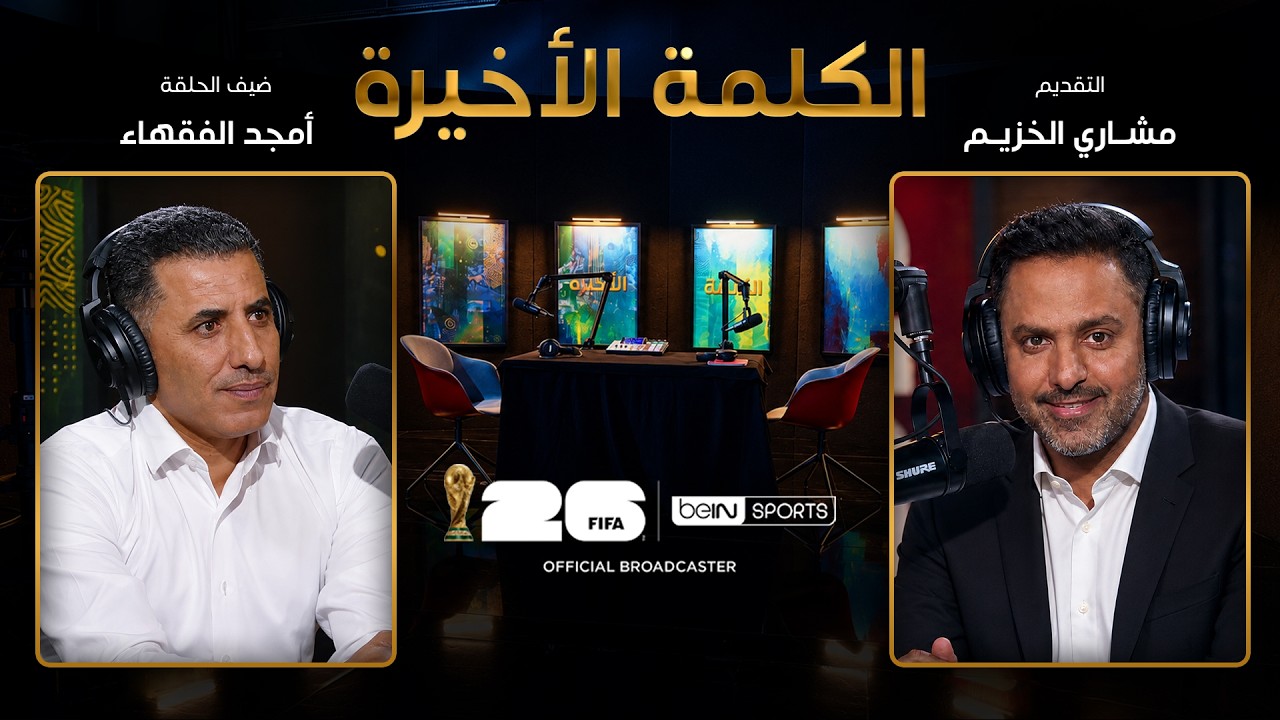
A Glimpse into the Broadcast Studio

Badr Eddine El-Idrissi sharing his expert opinions and exclusive football analysis from the beIN SPORTS studio. These discussions provide invaluable insights into the world of FIFA World Cup and international football.
Frequently Asked Questions (FAQ)
Q1: What was Diego Maradona's role in the 1982 FIFA World Cup?
A1: The 1982 FIFA World Cup was Diego Maradona's first appearance at the senior World Cup. At just 21 years old, he was the star player for Argentina, the reigning champions. While he showed flashes of his extraordinary talent, including scoring two goals, the tournament was also a challenging experience for him and the team, which failed to progress beyond the second group stage. It was a crucial learning curve that preceded his legendary performance in 1986.
Q2: What "surprises" are commonly associated with the 1982 FIFA World Cup?
A2: The 1982 FIFA World Cup was rich with surprises. Key examples include Algeria's stunning victory over West Germany in the group stage and Italy's remarkable turnaround, progressing from three unconvincing draws in the first round to ultimately winning the tournament, notably defeating the highly favored Brazilian 'Dream Team' along the way. These unexpected twists underscored the unpredictable nature of international football.
Q3: Who is Badr Eddine El-Idrissi and what insights does he provide?
A3: Badr Eddine El-Idrissi is a respected football analyst associated with beIN SPORTS. He provides expert opinions and exclusive football analysis, particularly focusing on historical perspectives. His insights often include personal "memories of Maradona" and deep dives into the "surprise" elements of past FIFA World Cup tournaments like 1982, offering valuable context and informed commentary on significant football moments and trends.
Q4: How did the 1982 World Cup influence the evolution of international football?
A4: The 1982 FIFA World Cup was significant for expanding to 24 teams, making it a more inclusive and globally representative tournament. It showcased diverse tactical approaches, from Italy's defensive resilience to Brazil's attacking flair, influencing future strategies. The tournament also highlighted the immense pressure on star players and the potential for underdog stories, setting precedents for the drama and excitement seen in subsequent FIFA World Cup events, including the upcoming FIFA World Cup 2026.
Q5: Where can I find more premium football analysis like this?
A5: For more premium football news, in-depth analysis, and exclusive insights, FIFA WORLD CUP NOOR offers comprehensive coverage of international football, including the FIFA World Cup, FIFA World Cup 2026, Champions League, Premier League, LaLiga, Serie A, Bundesliga, and Ligue 1. Our articles feature expert opinions and detailed football match analysis to keep you informed about the beautiful game.
About FIFA WORLD CUP NOOR
FIFA WORLD CUP NOOR is an independent football magazine dedicated to delivering unparalleled coverage and insightful football analysis from across the globe. We pride ourselves on providing premium football news, in-depth features, and compelling stories that capture the essence of the beautiful game.
Our comprehensive reporting spans the most prestigious tournaments and leagues, ensuring fans are always at the forefront of the action. From the thrilling drama of the FIFA World Cup to the latest developments for FIFA World Cup 2026, we bring you expert perspectives and football highlights that truly matter. We also extensively cover elite club competitions, including the tactical battles of the Champions League, the electrifying pace of the Premier League, the technical brilliance of LaLiga, the tactical mastery of Serie A, the dynamic play of the Bundesliga, and the emerging talents of Ligue 1.
At FIFA WORLD CUP NOOR, our mission is to be your ultimate source for International Football, offering a blend of detailed football match analysis, insightful commentary, and captivating narratives that resonate with passionate fans worldwide. Join our community for the best in football journalism.
Labels & Hashtags:
© 2026 FIFA WORLD CUP NOOR. All rights reserved. Your ultimate source for football news and analysis.



No comments:
Post a Comment