

Ali Al-Zein's Final Word: Decoding the World Cup Legacy of Messi and Maradona
An unparalleled deep dive into football's greatest icons and their indelible mark on the FIFA World Cup.
The Immortal Legacies: Messi, Maradona, and the World Cup Stage
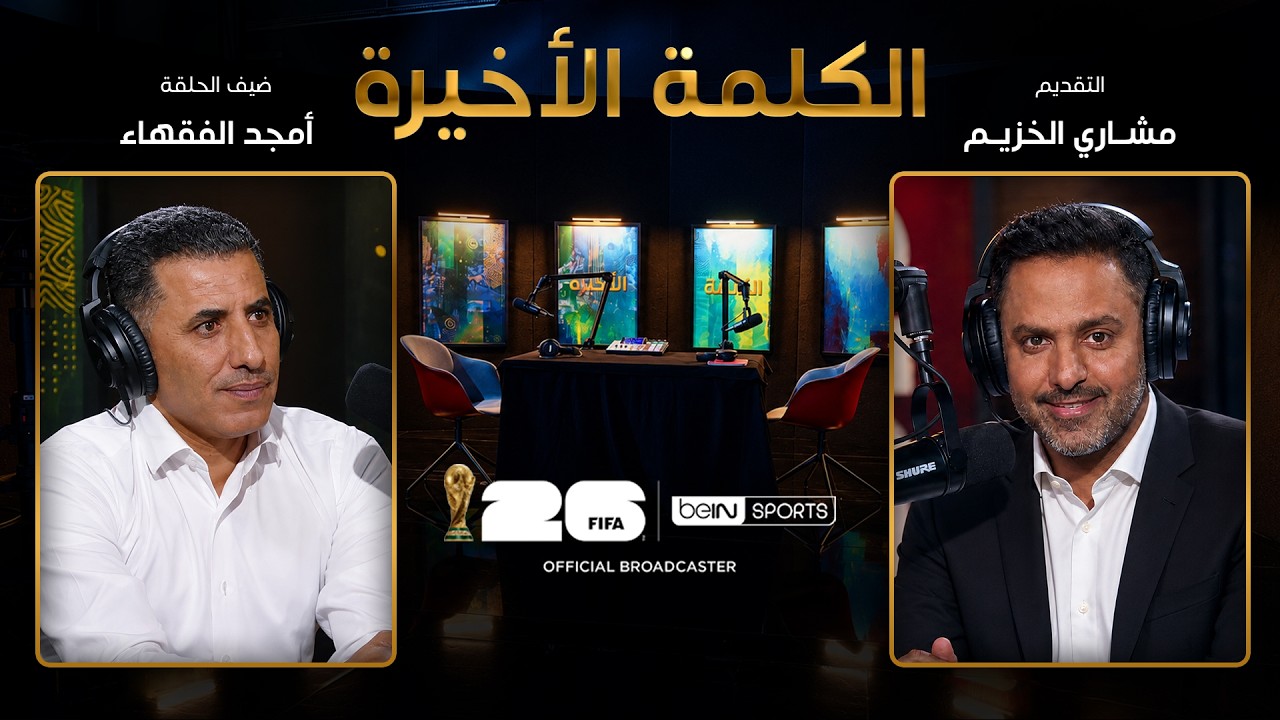
The FIFA World Cup stands as the pinnacle of football, a quadrennial spectacle where legends are forged and history is written. In the annals of this illustrious tournament, few names resonate with the power and reverence of Lionel Messi and Diego Maradona. Their journeys, triumphs, and profound impact on the game continue to inspire debate, awe, and endless discussion among fans and pundits alike. This article delves into the insightful analysis presented by Ali Al-Zein from the acclaimed beIN SPORTS studio, offering an expert perspective on the memories, moments, and enduring legacies these two Argentine maestros crafted on football's grandest stage.
Ali Al-Zein's 'Final Word' provides an exclusive football analysis, dissecting the nuances of their World Cup careers and exploring what made their contributions so extraordinary. From Maradona's iconic solo efforts to Messi's masterful orchestration of play, both players have defined eras and pushed the boundaries of what is possible in international football. Their stories are interwoven with the fabric of the World Cup itself, representing the dreams and aspirations of entire nations. As we look towards the FIFA World Cup 2026, understanding the benchmarks set by these titans becomes ever more crucial for assessing the next generation of footballing greats.
This comprehensive article will navigate through the competition context, tactical brilliance, and unforgettable key moments associated with their World Cup sagas, culminating in expert opinions that illuminate their unparalleled influence. Join us as we explore the 'best moments from the FIFA World Cup' through the lens of two players who transcended the sport to become global cultural phenomena, forever etching their names into the hallowed halls of football history.
The Defining Arenas: Recalling World Cup Battles and Brilliance
While a specific match may not always encapsulate the entirety of a player's World Cup journey, the careers of both Lionel Messi and Diego Maradona are defined by a series of high-stakes encounters that showcased their genius. These were not just games; they were arenas where legends were tested, where individual brilliance often clashed with collective strategy, and where the weight of national expectation rested squarely on their shoulders. Maradona's World Cup saga, particularly in 1986, was a masterclass in carrying a team to glory, marked by moments of audacious skill and unparalleled determination that left opponents bewildered and fans ecstatic.
Similarly, Messi's World Cup narrative is punctuated by numerous critical performances, from his early appearances to his eventual triumph. Each tournament presented different challenges and different adversaries, demanding adaptability, resilience, and an unwavering commitment to the cause. The evolution of his play through various FIFA World Cup editions illustrates a player constantly striving for perfection, facing the immense pressure of living up to the lofty comparisons with his legendary predecessor. These matches, though varying in outcome, consistently highlighted their unparalleled ability to influence proceedings, conjure moments of magic, and dictate the flow of the game.
The beauty of their World Cup contributions lies in their consistency in delivering under pressure, navigating through tactical challenges posed by the world's best teams. Whether it was breaking down a resolute defence, sparking a counter-attack from deep, or finding the decisive pass in a congested midfield, their presence alone elevated the spectacle. Reflecting on these memories provides a rich tapestry of football history, offering insights into the extraordinary demands of elite international football and the rare individuals capable of thriving within its unforgiving embrace. It's in these moments that the true essence of their World Cup impact is revealed, shaping the collective memory of football fans for generations.
The FIFA World Cup: A Crucible for Greatness Across Eras
The FIFA World Cup is more than just a football tournament; it is a global cultural event that captivates billions and halts the world in its tracks every four years. It represents the ultimate aspiration for any professional footballer, the stage where national heroes are crowned, and the dreams of an entire nation can be realized or shattered within 90 minutes. For both Diego Maradona and Lionel Messi, the World Cup was the ultimate proving ground, a crucible where their immense talents were put to the sternest test against the backdrop of unparalleled pressure and expectation.
Maradona’s era saw a different footballing landscape, one perhaps less tactically rigid than today, allowing for more individualistic brilliance to flourish. His performances in Mexico 1986, in particular, transcended mere sporting achievement, becoming a cultural phenomenon. He embodied the spirit of Argentina, carrying a team to glory with sheer force of will and a series of unforgettable, almost mythical, plays. The competition then, as now, was fiercely contested, but Maradona's unique blend of physical power, exquisite close control, and visionary passing allowed him to dominate matches in a way few others ever have.
Fast forward to Messi’s multiple World Cup campaigns, culminating in the historic FIFA World Cup 2022 triumph. Messi navigated a more globally interconnected and tactically sophisticated football world. Defences are more organized, spaces are tighter, and every opponent studies every move. Yet, Messi adapted, evolved, and ultimately conquered. His journey reflected a shift in how modern football is played, emphasizing collective systems while still providing the canvas for his extraordinary individual artistry. His determination to finally lift the trophy for Argentina highlights the immense emotional and historical weight carried by the competition, not just for the players but for their homelands.
The World Cup’s enduring appeal lies in its ability to bring together diverse styles of play, cultures, and footballing philosophies. It's where the best of Premier League, LaLiga, Serie A, Bundesliga, and Ligue 1 stars converge, wearing their national colours and battling for universal supremacy. The narratives created are timeless, shaping how we remember not just individual players but also the eras in which they competed. As we anticipate FIFA World Cup 2026, the context of these past glories provides an invaluable framework for understanding the future of international football and the relentless pursuit of ultimate football highlights.
The tournament always throws up unforgettable moments, from stunning goals to heroic saves, from tactical masterclasses to underdog triumphs. It's the ultimate stage for players to etch their names into history, and the pressure is immense. The very structure of the competition – group stages leading to ruthless knockout rounds – demands unwavering focus and peak performance. It is this environment that truly tests the mettle of a champion and determines who will be remembered for generations. The World Cup is where dreams are either realized in a blaze of glory or ended in heartbreak, making every edition a unique and compelling drama.
Tactical Masterstrokes and Individual Brilliance: A World Cup Confluence
The tactical landscape of the FIFA World Cup is a constantly evolving canvas, where coaches meticulously craft strategies to counter the world's best. Yet, for players of the caliber of Diego Maradona and Lionel Messi, their individual brilliance often served as the ultimate tactical weapon, capable of dismantling even the most well-drilled defenses. Maradona's game was built on raw power, incredible balance, and an almost supernatural ability to dribble through entire teams. His tactical role was often as a primary playmaker and goal threat, operating in the number 10 position with immense freedom, drawing defenders and creating space for others.
Coaches in his era understood that the best tactical approach for Argentina was often to "give the ball to Diego." This wasn't a lack of strategy, but a recognition of his unique capacity to unlock games through individual moments of genius. His infamous 'Hand of God' and the 'Goal of the Century' against England in 1986 were not tactical plays in the traditional sense, but moments born of an extraordinary player operating at the peak of his powers, defying conventional defensive schemes. He was a force multiplier, transforming his team's capabilities through sheer will and skill, an approach that is often hard to replicate in modern football.
Messi, on the other hand, has adapted his game across multiple World Cup cycles, often operating in different tactical systems under various coaches. From an explosive winger to a false nine, and eventually to a deeper-lying playmaker who orchestrates attacks, his tactical versatility has been remarkable. While his dribbling ability remains elite, his more recent World Cup performances showcased an enhanced understanding of game management, space creation, and decisive passing. He became an engine for the Argentine attack, dictating tempo and executing crucial plays that broke down even the most stubborn of opponents. His ability to draw multiple defenders allowed other players to find space, a tactical advantage that coaches consistently tried to exploit.
Modern international football emphasizes collective pressing, defensive solidity, and seamless transitions. In this environment, players like Messi demonstrate how individual genius can still thrive, but often within a more structured framework. His free-kick prowess, pinpoint passes, and uncanny ability to find pockets of space are all tactical elements that contribute significantly to a team’s success. The balance between allowing such creative freedom and maintaining defensive discipline is a constant challenge for World Cup coaches, making the tactical battles a fascinating aspect of every tournament. The evolution of tactical analysis, especially from studios like beIN SPORTS, provides invaluable insight into these complex footballing narratives.
The best football analysis often highlights how these legendary players influenced tactical decisions, not just for their own teams but for their opponents. How do you stop a player who can single-handedly change the outcome of a match? This question has plagued coaches for decades when facing Maradona or Messi. Their presence on the field often forced opposing managers to rethink their entire defensive strategy, sometimes even dedicating multiple players to mark them. This 'Messi-effect' or 'Maradona-effect' created numerical advantages elsewhere on the pitch, which smart teams could then exploit. It's a testament to their unparalleled influence that they could shape the tactical approach of an entire tournament, a rare feat in the history of international football.
Legends Defined: The World Cup Stories of Messi and Maradona
Diego Maradona: El Pibe de Oro's Unforgettable Saga
Diego Maradona's name is synonymous with the FIFA World Cup. His journey through the tournament is a vibrant tapestry of unparalleled skill, controversial moments, and ultimate glory. From his debut in 1982, through his unforgettable triumph in 1986, to his final appearances in the early 90s, Maradona embodied the spirit of Argentine football. He was a force of nature, a player whose every touch carried the promise of something extraordinary. His ability to accelerate with the ball, change direction in an instant, and deliver incisive passes or thunderous shots made him virtually unplayable on his day.
In 1986, Maradona delivered arguably the most dominant individual performance in World Cup history. He was the undisputed leader, scoring five goals and assisting five others, often dragging his team through difficult matches almost single-handedly. His vision, leadership, and audacious skill captivated audiences worldwide. Beyond the goals and assists, it was his sheer presence, his fighting spirit, and his ability to inspire his teammates that set him apart. He played with a swagger and an intensity that galvanized the entire squad, pushing them to achieve what many thought impossible. His performances in this tournament cemented his place as one of the game's all-time greats, a true icon of international football.
Maradona’s impact extended far beyond the pitch. He became a symbol of hope and aspiration for millions, his life a dramatic narrative of triumph and turmoil. His World Cup story is deeply ingrained in the collective memory, not just as a series of football matches, but as an epic tale of a flawed genius conquering the world. He played with a raw, visceral passion that resonated deeply with fans, making him an almost mythical figure. His legacy continues to inspire players and fans, a testament to the enduring power of his footballing genius and his unforgettable contribution to the FIFA World Cup.
Lionel Messi: The Pursuit of Perfection and Ultimate Triumph
Lionel Messi's World Cup saga is a testament to perseverance, evolution, and the relentless pursuit of perfection. From his first appearance in 2006, the world watched as he matured from a prodigious talent into the undisputed best player of his generation. For years, the elusive World Cup trophy seemed to be the only missing piece in an otherwise glittering career that saw him dominate in the Champions League, Premier League, LaLiga, Serie A, and Bundesliga through his club exploits. His journey was marked by moments of breathtaking brilliance, near misses, and the immense burden of expectation placed upon him as Maradona's spiritual successor.
Messi's style is characterized by exquisite close control, unmatched dribbling ability, and a footballing brain that sees passes and opportunities others can only dream of. He is a master of creating space, both for himself and for his teammates, with subtle movements and sudden bursts of pace. His transformation from a primarily goal-scoring forward to a more comprehensive playmaker, capable of dictating the entire game, was evident in his later World Cup campaigns. This evolution allowed him to remain incredibly effective even as he approached the twilight of his career, showcasing his adaptability and profound understanding of the game.
The culmination of his World Cup dream came in 2022, a tournament where he truly led from the front, scoring crucial goals, providing vital assists, and inspiring his team with an indomitable spirit. It was a performance that solidified his place in the pantheon of footballing gods, finally achieving the one accolade that had eluded him. His victory resonated globally, a story of an unparalleled talent finally achieving ultimate validation on the biggest stage. Messi’s World Cup legacy is one of unwavering dedication, sublime artistry, and the ultimate triumph against all odds, leaving an indelible mark on football history and securing his place among the greatest World Cup players.
Comparing Messi and Maradona naturally invites endless debate, yet both represent the pinnacle of individual footballing brilliance in their respective eras. While Maradona's journey was more explosive and arguably relied more on raw individual moments, Messi's was a prolonged masterclass in consistency and adaptability, culminating in the ultimate prize. Their legacies, while distinct, both contribute to the rich narrative of the FIFA World Cup, proving that even in a team sport, the impact of truly exceptional individuals can redefine what is possible. Their names will forever be intertwined with the World Cup's history, inspiring generations of football fans and players alike.
Iconic Flashpoints: Unforgettable Moments from World Cup History
The FIFA World Cup is a tournament built on moments – flashpoints of brilliance, drama, and emotion that are replayed and remembered for decades. For players like Messi and Maradona, these key moments are not just highlights; they are the very fabric of their legendary status. While specific match details are not to be invented, we can reflect on the *types* of moments that define their World Cup narratives, moments that capture the essence of their genius and the sheer spectacle of international football.
For Maradona, these moments were often individualistic displays of daring and skill. Picture the electrifying runs from deep within his own half, leaving a trail of defenders in his wake, before a cool finish or a perfectly weighted pass. Imagine the powerful, unexpected shots from outside the box that found the top corner, or the audacious chips over advancing goalkeepers. His ability to change a game with a single, decisive action, whether it was a moment of controversy or pure magic, left an indelible mark. These were moments of pure footballing theatre, where the world held its breath, knowing that something extraordinary was about to unfold.
Messi's World Cup journey is similarly replete with defining instances. Consider the moments of surgical precision in his passing, splitting entire defenses with a single through-ball. Envision his signature dribbles, intricate and low-to-the-ground, weaving through a congested midfield before unleashing a powerful strike. Recall the crucial free-kicks, bent with impossible spin and trajectory, finding the net when his team needed it most. Beyond the attacking prowess, there were moments of leadership – rallying his teammates, demanding more, or simply holding the ball to relieve pressure in critical stages of a match. His journey culminated in a series of defining performances in the 2022 FIFA World Cup, where he consistently delivered when it mattered most, creating a narrative arc that transcended the sport.
These key moments, whether defensive interventions, midfield masterclasses, or striking brilliance, contribute to the tapestry of World Cup highlights that fans cherish. They are the memories that endure, the stories passed down through generations of football enthusiasts. They underscore the immense pressure of the World Cup stage and the rare few who can consistently rise to the occasion, delivering performances that defy expectation and redefine the boundaries of what is possible in football. Such instances are why the World Cup remains the ultimate showcase for individual and collective excellence, captivating audiences and inspiring future generations of athletes in Premier League, LaLiga, Serie A, Bundesliga, and Ligue 1.
Every World Cup is a collection of such moments, and the legends are those who produce them most frequently and most memorably. These instances are often etched into memory not just for their technical brilliance but for their emotional weight, the context of the game, and the sheer audacity of the player involved. They are the peaks of the World Cup narrative, the stories that get told and retold, defining an era and cementing the place of players like Messi and Maradona in the pantheon of footballing gods. These moments are what makes the World Cup truly special, a stage where dreams are made and legends are born.
Ali Al-Zein's 'Final Word': Unpacking Football's Greatest Debates
The exclusive football analysis and expert opinions offered by seasoned pundits like Ali Al-Zein from the beIN SPORTS studio are invaluable in understanding the complexities and nuances of the game. Their insights transcend mere commentary, delving into the tactical intricacies, historical comparisons, and psychological aspects that define elite-level football, particularly on a stage as grand as the FIFA World Cup.
"The World Cup is where narratives are carved in stone. When you discuss players like Messi and Maradona, you're not just talking about football; you're talking about legacy, about passion, about the very soul of a nation. Their stories offer endless lessons for the game, for players, and for fans."
- Ali Al-Zein (via beIN SPORTS analysis)
Such expert analysis provides a crucial lens through which to view the careers of players like Messi and Maradona. It's not enough to simply witness their brilliance; understanding the 'why' and 'how' behind their performances enriches the football experience. Pundits like Al-Zein offer unique perspectives derived from years of studying the game, often having played at high levels or possessing an unparalleled depth of knowledge regarding tactics, player psychology, and football history. They bridge the gap between casual observation and profound understanding.
Discussions surrounding Messi and Maradona, often framed as the 'greatest of all time' debate, are particularly ripe for expert dissection. Al-Zein's 'Final Word' segments are designed to provide a comprehensive, balanced, and insightful look at these footballing titans. They explore how both players handled immense pressure, their different leadership styles, and how their impact extended beyond goals and assists to influence team dynamics and even national morale. These are the conversations that elevate football from a sport to a profound cultural phenomenon, offering lessons on dedication, resilience, and the relentless pursuit of excellence.
The insights shared from the beIN SPORTS studio underscore the importance of nuanced football analysis. It's about breaking down the best moments from the FIFA World Cup, contextualizing them within the broader scope of football history, and appreciating the fine margins that separate good from truly legendary. For fans of International Football, these expert opinions are vital for a deeper engagement with the game, helping to appreciate the tactical depth and the sheer artistry involved in achieving World Cup glory.
Echoes of Greatness: Charting the Future Towards FIFA World Cup 2026
As the football world casts its gaze towards the FIFA World Cup 2026, the legacies of players like Lionel Messi and Diego Maradona serve as both an inspiration and a formidable benchmark. Their careers remind us of the immense personal sacrifice, unwavering dedication, and extraordinary talent required to conquer international football's ultimate prize. The next generation of stars, emerging from leagues like the Premier League, LaLiga, Serie A, Bundesliga, and Ligue 1, will undoubtedly draw motivation from their predecessors, aiming to etch their own names into World Cup folklore.
The upcoming FIFA World Cup 2026 promises to be a spectacular event, showcasing the evolution of the global game. New tactical trends will emerge, new heroes will rise, and new stories will unfold. Yet, the principles that guided Messi and Maradona – individual brilliance within a collective effort, unyielding spirit, and the ability to perform under extreme pressure – will remain timeless. The continuous pursuit of World Cup glory will see teams and players push boundaries, fueled by the desire to create their own 'best moments from the FIFA World Cup.'
The comprehensive football analysis provided by platforms like beIN SPORTS will play a crucial role in dissecting these emerging narratives. Experts will compare current talents to the standards set by Messi and Maradona, evaluating their potential to leave a similar indelible mark on the tournament. The anticipation for FIFA World Cup 2026 is building, not just for the spectacle of the matches, but for the chance to witness new legends in the making, players who can capture the imagination of the world as effectively as the Argentine giants did.
The lessons learned from studying the World Cup careers of Messi and Maradona extend beyond individual technique or tactical systems. They speak to the enduring power of dreams, the importance of leadership, and the profound connection between a player and their nation. As we await the next chapter in World Cup history, their memories serve as a powerful reminder of what makes international football truly special, forever shaping the aspirations of all who dream of lifting that coveted golden trophy.
Watch The Full Expert Analysis
► Watch Full Video on YouTubeAdditional Insights from the Studio

Delving deeper into football analysis and expert opinions, straight from the beIN SPORTS studio.
Frequently Asked Questions About World Cup Legends
1. What makes Lionel Messi and Diego Maradona considered among the greatest World Cup players?
Both Messi and Maradona showcased unparalleled individual brilliance, leadership, and decisive impact on their respective World Cup tournaments. Maradona almost single-handedly led Argentina to victory in 1986 with iconic performances, while Messi crowned his illustrious career by guiding Argentina to the FIFA World Cup 2022 title, demonstrating consistent excellence and adaptability over multiple tournaments. Their ability to deliver under immense pressure and produce game-changing moments sets them apart.
2. How does expert analysis, like Ali Al-Zein's, enhance understanding of World Cup moments?
Expert analysis provides a deeper, more nuanced understanding beyond just watching the game. Pundits like Ali Al-Zein offer insights into tactical strategies, player motivations, historical contexts, and the psychological pressures involved. This helps fans appreciate the complexities of performances and decisions, enriching the overall football experience and providing valuable perspective on World Cup highlights and legacies.
3. What role does individual brilliance play in the FIFA World Cup, given its team-sport nature?
While football is a team sport, individual brilliance often acts as a catalyst for collective success, especially in the high-stakes environment of the FIFA World Cup. Players like Messi and Maradona possess the unique ability to unlock defenses, create chances from nothing, or inspire their teammates through sheer force of will. Their individual contributions can elevate an entire team's performance, turning tight matches and difficult situations into triumphs, becoming iconic football highlights.
4. How do the World Cup careers of Messi and Maradona reflect the evolution of international football?
Maradona's era (80s-90s) showcased a more individualistic style where one player could dominate without extreme tactical rigidity. Messi's multi-decade career (00s-20s) reflects the modern game's emphasis on tactical sophistication, collective pressing, and data-driven analysis, yet his adaptability allowed him to continue excelling. Both demonstrate how elite players adapt and influence the game, even as football tactics evolve globally, influencing play across leagues like the Premier League, LaLiga, Serie A, Bundesliga, and Ligue 1.
5. What can we expect from the FIFA World Cup 2026 based on these legacies?
The FIFA World Cup 2026 will undoubtedly be influenced by the benchmarks set by Messi and Maradona. We can expect fierce competition, groundbreaking tactical approaches, and the emergence of new players striving to achieve legendary status. The tournament will continue to be a stage for incredible football highlights, dramatic storylines, and deep football analysis, as the world anticipates the next chapter in World Cup history.
About FIFA WORLD CUP NOOR
FIFA WORLD CUP NOOR is your premier independent football magazine, dedicated to providing unparalleled coverage and insightful football analysis from across the globe. We delve deep into the heart of the beautiful game, offering comprehensive articles, expert opinions, and stunning visuals to bring you closer to the action. Our passion is football, and our mission is to deliver content that resonates with fans who live and breathe the sport.
We cover every angle of the world's most prestigious tournaments and leagues, including the iconic FIFA World Cup, with a keen eye on the upcoming World Cup 2026. Beyond international football's grandest stage, our coverage extends to the thrilling drama of the Champions League, the intensity of the Premier League, the artistry of LaLiga, the tactical battles of Serie A, the power of the Bundesliga, and the flair of Ligue 1. For the best in Football News, Football Analysis, Football Highlights, and International Football, FIFA WORLD CUP NOOR is your ultimate destination.



No comments:
Post a Comment