


Famous Ending Undoes Germany
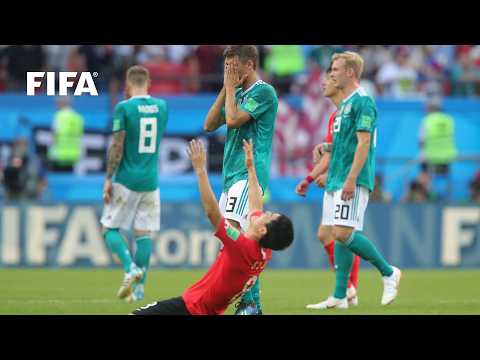
A moment of disbelief for Manuel Neuer and the German squad as their 2018 FIFA World Cup dream crumbles.
The Reigning Champions' Shocking Group Stage Exit That Sent Ripples Across the Football World

We present this content in a sports-style analytical format, inspired by professional football coverage and based on available verified information regarding the 2018 FIFA World Cup.
Table of Contents
- Introduction: The Unthinkable Reality
- The Dramatic Downfall: How It Unfolded
- Germany's Campaign: A Deep Dive into Disarray
- The Aftermath: Voices of Disappointment and Resolve
- Beyond Germany: Shifting the World Cup Narrative
- Tactical Autopsy: What Went Wrong on the Pitch
- Key Facts at a Glance
- The Road to Ruin: A Timeline of Events
- What Happens Next: Legacy and Rebuilding
- Conclusion: An Enduring World Cup Saga
- Share Your Thoughts
Introduction: The Unthinkable Reality
The 2018 FIFA World Cup in Russia delivered countless moments of breathtaking football, but perhaps none were as universally shocking as the early exit of defending champions Germany. Having lifted the coveted trophy just four years prior in Brazil, Joachim Löw’s formidable squad arrived in Russia as overwhelming favourites, a symbol of precision, tactical prowess, and an unyielding winning mentality. Yet, what unfolded in their Group F campaign was a dramatic, unprecedented collapse that left fans, pundits, and the players themselves in utter disbelief. This was not just a defeat; it was a seismic event that shook the foundations of modern football, raising profound questions about complacency, tactical evolution, and the inherent unpredictability of the beautiful game.
The narrative of invincibility surrounding Die Mannschaft evaporated amidst a series of lacklustre performances, culminating in a historic defeat against an underdog nation. The sheer weight of expectation, the pressure of defending a title, and the fierce competition from hungry rivals converged to create a perfect storm. For a nation accustomed to deep tournament runs, often reaching the semi-finals or beyond, a group stage elimination was not merely a disappointment; it was an existential crisis for German football, prompting widespread introspection and demands for radical change. This article delves into the famous ending that undid Germany, dissecting the events, the reactions, and the lasting impact of one of the World Cup's most memorable upsets.
The Dramatic Downfall: How It Unfolded
Germany's journey in the 2018 World Cup began with a quiet confidence, almost an aura of entitlement, befitting a reigning champion. Drawn into Group F alongside Mexico, Sweden, and South Korea, it was widely assumed they would navigate this stage with relative ease. However, the cracks began to show almost immediately.
Matchday 1: Mexico's Stunning Statement
Their opening fixture against Mexico on June 17th, 2018, was a harbinger of things to come. Mexico, under Juan Carlos Osorio, executed a brilliant counter-attacking strategy that exposed Germany's high defensive line and lack of pace. Hirving Lozano's goal in the 35th minute, following a devastating break, sent shockwaves through the Luzhniki Stadium. Despite Germany's desperate attempts to equalise, they looked disorganised and uninspired. The 1-0 defeat was their first opening World Cup loss in 36 years and immediately cast a shadow over their campaign.
Matchday 2: Kroos's Moment of Brilliance vs. Sweden
Facing Sweden on June 23rd, 2018, in Sochi, Germany found themselves in a must-win situation. The pressure was immense. Ola Toivonen's goal for Sweden put them on the brink of disaster, but Marco Reus quickly equalised after halftime. The match seemed destined for a draw, which would have put Germany's qualification in serious jeopardy. Then, in the 95th minute, with seconds remaining, Toni Kroos conjured a moment of pure magic. A perfectly executed short free-kick to Reus, followed by a curling shot from a tight angle, found the back of the net. The stadium erupted; Germany had snatched a dramatic 2-1 victory, and it felt like a turning point, a resurrection of their championship spirit. The relief was palpable, leading many to believe the champions had finally woken up.
Matchday 3: The Unthinkable Against South Korea
Heading into the final group game against South Korea on June 27th, 2018, Germany knew a victory was necessary to secure passage to the knockout stages, though permutations involving the Sweden vs. Mexico game also played a role. On paper, South Korea, already eliminated after two defeats, seemed like the perfect opponent for Germany to secure a convincing win. Yet, what unfolded in Kazan was a nightmare scenario.
Germany dominated possession, but their attacks lacked penetration, creativity, and urgency. Shot after shot was either off target or saved by the inspired Jo Hyeon-woo in the South Korean goal. As the minutes ticked away, a sense of desperation grew. In the dying moments of injury time, a corner kick for South Korea led to a scramble in the box. Kim Young-gwon bundled the ball into the net in the 92nd minute. Initially ruled offside, VAR intervened, correctly overturning the decision as the ball had come off a German player. Pandemonium ensued. Germany pushed forward in a frantic, all-out assault, even sending goalkeeper Manuel Neuer into the attacking third. This audacious move backfired spectacularly.
With Neuer stranded deep in South Korean territory, a clearance found Son Heung-min, who sprinted unimpeded towards an empty German net, slotting the ball home in the 96th minute. The final whistle blew moments later, confirming Germany's 2-0 defeat. It wasn't just a loss; it was an elimination. For the first time in their storied World Cup history, Germany exited the tournament in the group stage. The defending champions were out, bottom of their group, a famous ending that truly undid Germany and left the football world speechless.
Germany's Campaign: A Deep Dive into Disarray
The German squad that arrived in Russia was a blend of experienced world-beaters and promising young talents, seemingly perfectly balanced. Yet, their performance was anything but. Several factors contributed to their shocking downfall, revealing a team struggling with identity, motivation, and tactical adaptability.
Tactical Stagnation and Predictability
Under Joachim Löw, Germany had perfected a possession-based, fluid style of play that brought them immense success. However, by 2018, this approach had become somewhat predictable. Opponents had figured out how to counter their system: sit deep, absorb pressure, and hit on the counter-attack, exploiting Germany's high defensive line and the slower recovery pace of their centre-backs.
Löw’s rigid adherence to his preferred system, even when it wasn't working, proved detrimental. There was a perceived lack of tactical flexibility and a reluctance to deviate from established patterns. Players often looked isolated, and the link-up play that defined their 2014 triumph was missing.
Lack of Urgency and Complacency
Many observers pointed to a collective sense of complacency within the squad. Having won the Confederations Cup a year prior with a second-string side, there might have been an underlying belief that victory in the World Cup was almost an entitlement. This manifested as a lack of intensity in the crucial group stage matches. The team often played at a walking pace, struggling to break down resilient defences, and lacking the ferocious hunger that characterised past German teams.
Squad Selection and Internal Dynamics
The exclusion of Leroy Sané, a breakout star for Manchester City, raised eyebrows, while the inclusion of other players whose form was questionable also became a talking point. The 'Özil-Gündogan photo controversy' with Turkish President Erdoğan just before the tournament created an unwelcome distraction and, arguably, tension within the squad and with the German public, impacting team cohesion and focus.
Manuel Neuer, recovering from a long injury layoff, was reinstated as captain, but his match sharpness was not at its peak. Key players like Thomas Müller and Mesut Özil, instrumental in 2014, failed to consistently deliver moments of brilliance, struggling with form and impact.
The 'Curse of the Champions'
Germany's exit also reinforced a peculiar trend: since 1998, five of the six defending champions (France 2002, Italy 2010, Spain 2014, Germany 2018) had failed to progress past the group stage. This 'curse' suggested the immense difficulty and pressure associated with retaining the World Cup, a challenge Germany ultimately could not overcome.
The Aftermath: Voices of Disappointment and Resolve
The immediate reactions from the German camp after the South Korea defeat were a mixture of shock, profound disappointment, and attempts to rationalise the unthinkable. The usually stoic German football machine was visibly shaken.
Joachim Löw's Reflection
Head coach Joachim Löw, who had been at the helm since 2006 and led Germany to the 2014 triumph, faced intense scrutiny. He expressed deep sadness and took responsibility, stating, "The disappointment of us being eliminated is huge. We didn't deserve to win the title again, we didn't deserve to get into the last 16. We were eliminated not because we didn't want to score, but because we didn't succeed in scoring." Löw initially chose to remain in his position, asserting a desire to rebuild the team.
Player Statements
The players were equally devastated. Manuel Neuer, the captain, described it as "bitter" and "pathetic," acknowledging that the team "missed everything." Mats Hummels, the defender, candidly admitted, "We played badly. If you concede two goals in the last few minutes, you deserve to be eliminated. This is a very bitter evening for us." Thomas Müller, a veteran of previous World Cups, struggled to articulate the team's failure, echoing a sense of collective underperformance.
Public and Media Response
Back home, the reaction was swift and fierce. German media outlets did not hold back, labelling the exit a "historic disgrace" and a "nightmare." Fans expressed their anger and bewilderment, demanding immediate changes and a thorough overhaul of the national team setup. The once unwavering support for Löw and his squad was fractured, replaced by a yearning for accountability and a new direction.
The nation, typically united behind its football team, found itself in a moment of collective introspection, questioning the very core of what it meant to be Die Mannschaft. The disappointment was not just about losing; it was about the manner of the defeat and the perceived lack of fight.
Beyond Germany: Shifting the World Cup Narrative
Germany's elimination was not just a blow for the four-time champions; it fundamentally altered the entire dynamic of the 2018 FIFA World Cup. The tournament, already filled with unexpected results, suddenly felt wide open, devoid of one of its most dominant forces.
An Open Field
With Germany out, a major contender was removed from the draw. This immediately boosted the morale and perceived chances of other traditional powerhouses like Brazil, France, Argentina, and Spain, as well as dark horses such as Belgium and Croatia. The path to the final became less predictable, promising a more varied and exciting knockout stage. The 'Group of Death' had claimed its most prominent victim, ensuring that no team could afford a moment of complacency.
Psychological Effect on Other Teams
The fall of Germany served as a stark warning to every team remaining in the competition. It underscored the fact that past glory counts for nothing on the pitch and that every opponent, regardless of their world ranking, demands respect and a full commitment. It highlighted the increasing global competitiveness of football, where tactical preparation, physical conditioning, and sheer will can overcome perceived disparities in talent.
Teams that might have previously harboured doubts about their ability to challenge the established elite found new belief. If Germany could be undone, then any champion could fall, creating an atmosphere of heightened intensity and possibility throughout the knockout rounds.
Media and Fan Engagement
The shock of Germany's exit provided an endless source of discussion and analysis for media outlets worldwide. It added a compelling narrative to the tournament, turning a significant portion of attention towards understanding what went wrong rather than simply celebrating successes. For fans, it was a moment of collective gasp, reminding everyone why the World Cup remains the pinnacle of sporting drama.
In essence, Germany's early departure contributed significantly to making the 2018 World Cup one of the most unpredictable and captivating in recent memory, proving that in football, nothing is ever guaranteed.
Tactical Autopsy: What Went Wrong on the Pitch
From a strategic standpoint, Germany's 2018 World Cup campaign unravelled due to a combination of factors that, in retrospect, were discernible flaws in their preparation and execution. Expert analysts quickly pinpointed several key areas where Löw's side faltered.
Exposure on the Flanks and Counter-Attacks
One of Germany's biggest vulnerabilities was their defensive structure, particularly when transitioning from attack to defence. The full-backs, often pushing high up the pitch, left vast spaces behind them. Opponents like Mexico exploited this brilliantly, launching rapid counter-attacks that often left Germany's central defenders exposed to pacey wingers and strikers. The lack of a dedicated defensive midfielder with the agility to cover these spaces exacerbated the issue, leaving too much responsibility on the central defenders, who were sometimes caught out of position or lacked the recovery speed needed.
Lack of Clinical Finishing and Attacking Edge
Despite dominating possession in all three group games, Germany struggled immensely to convert their chances. They registered numerous shots but lacked the incisiveness and clinical finishing required at the highest level. The absence of a prolific, traditional 'number nine' striker who could consistently convert half-chances was sorely felt. Timo Werner, while talented, often operated from wider positions, and other attacking midfielders struggled to provide a consistent goal threat. This led to frustrating periods of sterile possession, where the ball was recycled without truly threatening the opponent's goal.
Mental Fragility Under Pressure
The psychological aspect cannot be overstated. After the initial loss to Mexico, the team appeared to be under immense pressure. While Toni Kroos's late winner against Sweden provided a temporary reprieve, it didn't fully dispel the underlying anxiety. In the decisive match against South Korea, as time wore on and goals proved elusive, the players seemed to succumb to the pressure, making hurried decisions and losing their composure. This mental fragility was uncharacteristic of German teams renowned for their 'never-say-die' attitude and ability to perform under duress.
Stagnant Tactics Against Deep Blocks
Modern international football increasingly features teams adept at defending in compact, deep blocks. Germany’s established attacking patterns, which relied on intricate passing and width, struggled against such organised defences. There was a noticeable absence of Plan B; no dynamic changes in formation or personnel that could unlock stubborn opponents. Löw's substitutions often seemed to be like-for-like, rather than game-changing tactical shifts, further contributing to the perception of tactical stagnation.
Ultimately, Germany's 2018 World Cup campaign serves as a cautionary tale: even the most successful teams must constantly evolve, adapt, and maintain an unwavering hunger to succeed in the ever-demanding landscape of international football.
Key Facts at a Glance
The Road to Ruin: A Timeline of Events
Early 2018: Pre-Tournament Hype
Germany enters 2018 as reigning World Cup champions and Confed Cup winners, widely tipped as favourites. High expectations surround Joachim Löw and a blend of experienced stars and rising talent.
June 17, 2018: Shock Defeat to Mexico
Germany suffers a stunning 1-0 loss to Mexico in their opening Group F match. Hirving Lozano scores the decisive goal, immediately putting pressure on Die Mannschaft's campaign.
June 23, 2018: Toni Kroos's Late Heroics vs. Sweden
In a thrilling encounter, Germany is on the brink of elimination until Toni Kroos scores a magnificent free-kick in the 95th minute, securing a dramatic 2-1 victory over Sweden and reviving hopes.
June 27, 2018: Humiliation by South Korea
Germany faces South Korea in a must-win game. Despite dominating possession, they concede two late injury-time goals from Kim Young-gwon and Son Heung-min, losing 2-0 and crashing out of the tournament in the group stage, finishing last in Group F.
Post-Elimination: National Debate & Löw's Future
The elimination triggers a widespread national debate in Germany, questioning the DFB's leadership, Joachim Löw's tactics, and the team's mental fortitude. Löw confirms he will remain as coach, vowing to rebuild.
Long-Term Impact: Rebuilding and Renewal
Germany embarks on a long rebuilding phase, integrating new talents and attempting to rediscover their identity. The 2018 exit remains a stark reminder of football's unpredictability and the constant need for evolution at the top level.
What Happens Next: Legacy and Rebuilding
The 2018 FIFA World Cup exit was not merely a momentary stumble for Germany; it marked the end of an era and initiated a profound period of introspection and reconstruction for German football. The immediate aftermath saw Joachim Löw retain his position, a decision met with mixed reactions from fans and pundits alike. His mandate was clear: to overhaul the squad, refresh tactics, and ensure such a debacle would never be repeated.
In the years that followed, Germany has seen significant changes. Long-serving players who were integral to the 2014 success, such as Thomas Müller, Mats Hummels, and Jérôme Boateng, were initially phased out, only to be recalled later in an attempt to balance experience with youth. New talents emerged, aiming to infuse fresh energy and a more dynamic style of play. However, the path to redemption has been fraught with challenges, including inconsistent performances in subsequent tournaments.
The DFB (German Football Association) also underwent scrutiny, facing calls for structural changes to adapt to the evolving landscape of international football. The focus shifted towards developing a new generation of players, fostering tactical innovation, and restoring the winning mentality that had defined German football for decades. The legacy of the 2018 exit continues to shape decisions, serving as a constant reminder that success is never guaranteed and constant evolution is paramount.
The future of German football depends on effectively learning from this pivotal moment, embracing change, and meticulously planning for future tournaments. The goal remains to reclaim their rightful place at the pinnacle of international football, demonstrating resilience and a renewed commitment to excellence.
Conclusion: An Enduring World Cup Saga
The 2018 FIFA World Cup presented the football world with an unforgettable spectacle, and Germany's dramatic exit stands as one of its most defining narratives. It was a story that transcended mere sporting results, touching upon themes of complacency, the burden of expectation, and the brutal unpredictability inherent in the pinnacle of international competition. For the reigning champions, a squad laden with talent and experience, their group stage elimination was a humbling and historic moment that few could have foreseen.
The iconic images of dejected German players, particularly Manuel Neuer standing helpless as South Korea secured their second goal against an empty net, are etched into World Cup folklore. This famous ending not only undid Germany's tournament hopes but also sparked a necessary reckoning within German football, forcing a reevaluation of strategy, personnel, and mentality. While the immediate pain was profound, the long-term impact has been a catalyst for change, albeit a challenging one.
Ultimately, Germany's 2018 campaign serves as a powerful testament to the democratic nature of football – on any given day, against any opponent, the script can be flipped, and giants can fall. It reminds us that past glories offer no immunity from current challenges, and the hunger for victory must always be fresh. The 2018 World Cup was a tournament of upsets, and Germany's shocking departure remains one of its most enduring and impactful chapters.
⚽ What do you think about this situation?
Was Germany's early exit a one-off, or did it signal deeper issues? Share your opinion and join the conversation!
Engage & Comment🔥 Share your opinion in the comments and follow for more football updates.


No comments:
Post a Comment