


10-Minute Match | Brazil vs Chile | 2014 FIFA World Cup Round of 16
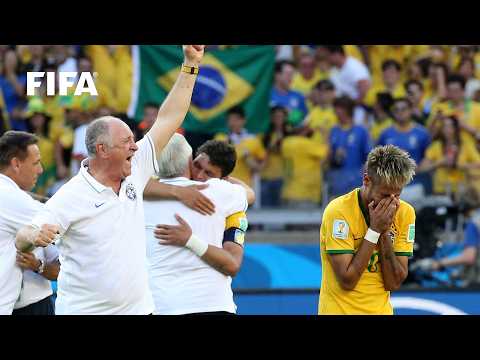
Brazil vs. Chile: The 10-Minute Epic That Defined a Nation's World Cup Dream
We present this content in a sports-style analytical format, inspired by professional football coverage and based on available verified information.
Article Overview
- Introduction: The Stakes of a Nation
- The Day Brazil Held Its Breath: A Match for the Ages
- Tactical Chess: Brazil's Burden vs. Chile's Ambition
- Voices from the Pitch: Players, Coaches, and a Nation's Roar
- Beyond 2014: The Enduring Legacy Towards FIFA World Cup 2026
- Expert Breakdown: The Fine Margins of World Cup Glory
- Key Match Facts at a Glance
- A Dramatic Timeline: Brazil vs. Chile 2014
- What Happens Next: Lessons for Future World Cups
- Conclusion: The Unforgettable Echoes
Introduction: The Stakes of a Nation
The FIFA World Cup, a quadrennial spectacle that grips the globe, is more than just a football tournament; it is a crucible of dreams, a stage for heroes, and a source of unforgettable drama. As the world eagerly anticipates the grandeur of the FIFA World Cup 2026, it is often the historical clashes, the moments of sheer will and raw emotion, that truly define the spirit of this magnificent competition. Few matches encapsulate this better than the epic Round of 16 encounter between hosts Brazil and their South American rivals Chile at the 2014 FIFA World Cup. This wasn't merely a game; it was a heart-stopping, nerve-shredding, 10-minute microcosm of everything that makes the World Cup unparalleled.
For Brazil, the 2014 tournament was steeped in unprecedented pressure. Playing on home soil, the weight of a nation obsessed with "o Hexa" – a record sixth World Cup title – rested heavily on the shoulders of every player. The ghost of 1950, when Brazil famously lost the final at home, loomed large. Every kick, every pass, every moment was scrutinized by millions, not just in Brazil, but by football aficionados worldwide. Chile, on the other hand, arrived with their 'Golden Generation' – a squad brimming with talent, tactical discipline under the astute guidance of Jorge Sampaoli, and a fearless attitude ready to disrupt any narrative. This clash wasn't just about advancing; it was about national identity, sporting destiny, and the sheer defiance of expectation.
Revisiting this extraordinary game provides not just a nostalgic journey into a past World Cup, but also a valuable lens through which to examine the dynamics, pressures, and potential for drama that await teams and fans alike as we look ahead to FIFA World Cup 2026. What lessons can be drawn from such a high-stakes encounter? How do these historic moments shape the expectations and preparations for future tournaments? The answers lie within the ten gripping minutes that separated agony from ecstasy for two proud footballing nations.
The Day Brazil Held Its Breath: A Match for the Ages
June 28, 2014, in Belo Horizonte. The Mineirão Stadium was a cauldron of yellow and green, vibrating with the collective hope and anxiety of a nation. The stage was set for a classic, a knockout tie where one team's World Cup dream would inevitably end. Brazil, led by the legendary Luiz Felipe Scolari, entered as favorites, but Chile, under the revolutionary Sampaoli, were no pushovers. They had already dispatched reigning champions Spain in the group stage, signaling their intent and capabilities.
The match began with an intensity that rarely wavered. Brazil struck first in the 18th minute. A corner from Neymar caused chaos in the Chilean box, with Thiago Silva flicking it on for David Luiz to bundle over the line. Or so it seemed. Replays later suggested it might have been an own goal from Chile's Gonzalo Jara, but the roar from the crowd was deafening, the relief palpable. The lead, however, was short-lived. In the 32nd minute, a lapse in concentration from Brazil's defense saw Eduardo Vargas intercept a throw-in, feeding Alexis Sánchez, who calmly slotted home to silence the partisan crowd. The score was level, and the tension ratcheted up several notches.
The second half was a relentless back-and-forth. Brazil pushed for a winner, with Hulk having a goal controversially disallowed for handball. Chile, resolute and disciplined, defended stoutly and threatened on the counter. Every tackle, every save, every near-miss felt monumental. As the game wore on, exhaustion began to set in, but the stakes ensured no quarter was given. Extra time brought with it an almost unbearable suspense. Both teams, wary of conceding, still managed to create chances. Pinilla's thunderous strike in the final minute of extra time, rattling the crossbar, remains one of the most agonizing near-misses in World Cup history. Had it gone in, the narrative would be entirely different. But fate had decided that this tie would be settled from 12 yards.
The penalty shootout was a masterclass in psychological warfare. Brazil's goalkeeper, Júlio César, a veteran under immense scrutiny, stepped up as a national hero, saving two of Chile's spot-kicks. Neymar, carrying the hopes of Brazil, converted his penalty with characteristic coolness. But it was the final kick, taken by Chile's Gonzalo Jara, that would seal the destiny of both teams. His shot struck the post, rebounding out, sending the Mineirão into an explosion of relief, tears, and unbridled joy. Brazil had survived by the narrowest of margins, advancing to the quarter-finals. Chile, despite a valiant effort, saw their World Cup journey end in heartbreak.
This match became a defining moment for the 2014 tournament. It showcased the immense pressure on a host nation, the sheer quality of emerging teams like Chile, and the brutal finality of knockout football. The ten minutes following Pinilla's crossbar shot, leading into and through the penalty shootout, were a condensed epic, proving that in the World Cup, fortunes can turn on the slightest deflection, a fingertip save, or a post's width. The match's emotional intensity left an indelible mark, reminding everyone that the World Cup is a stage where legends are born and hearts are broken with equal measure.
Tactical Chess: Brazil's Burden vs. Chile's Ambition
The 2014 Brazil vs. Chile match was a fascinating tactical battle, a clash of footballing philosophies as much as national wills. Brazil, under the pragmatic guidance of Luiz Felipe Scolari, aimed for a blend of defensive solidity and attacking flair, heavily reliant on the individual brilliance of Neymar. The team's structure was built to absorb pressure and launch swift counter-attacks, leveraging the pace of Hulk and Oscar, and the defensive acumen of Fernandinho and Luiz Gustavo in midfield. The central defensive partnership of Thiago Silva and David Luiz, though formidable on paper, showed moments of vulnerability that Chile expertly exploited.
The burden on Brazil was immense. As hosts, anything less than victory was deemed a failure. This psychological weight manifested in moments of cautious play and, at times, a visible struggle to maintain composure under pressure. Their preparation revolved around peaking for the knockout stages, but the group games had already hinted at a team that, while talented, was not invincible. The collective hope of an entire nation often felt more like an anchor than a sail, creating an environment where individual errors were amplified, and moments of brilliance became desperate necessities rather than confident expressions.
Chile, conversely, played with a freedom that belied the stakes. Jorge Sampaoli’s tactical approach was revolutionary: a high-octane, high-pressing, relentlessly aggressive system designed to suffocate opponents and create numerical advantages in attacking areas. Led by the dynamic Arturo Vidal, the tireless Alexis Sánchez, and the orchestrator Marcelo Díaz, Chile’s ‘La Roja’ pressed Brazil across every blade of grass, denying them time and space, especially in midfield. Their back three formation, often shifting to a back five when defending, allowed wing-backs to push high, overwhelming Brazil's wide players.
Sampaoli's men entered the tournament with a clear identity and unwavering belief. Having already proven their mettle against world-class opposition, including England and Spain, their preparation was meticulous, focusing on fitness, tactical cohesion, and mental resilience. They understood Brazil's reliance on Neymar and sought to isolate him, cutting off supply lines and doubling up whenever he received the ball. This tactical courage and commitment to their system made them an incredibly difficult opponent, turning the Mineirão into a battleground where tactical ingenuity met national fervour head-on. The encounter was a testament to how meticulous planning and an unwavering belief in a system can push even the most favoured teams to their absolute limits.
Voices from the Pitch: Players, Coaches, and a Nation's Roar
The immediate aftermath of the Brazil vs. Chile penalty shootout was a kaleidoscope of raw human emotion. For Brazil, the overwhelming sensation was one of sheer relief, mixed with tears of joy and exhaustion. Goalkeeper Júlio César, who had been heavily criticized in previous tournaments, emerged as the undisputed hero, saving two penalties and inspiring his teammates. His post-match interview, tearful and defiant, spoke volumes about the pressure he had been under and the redemption he felt. "Only God and my family know what I went through and what I still go through," he stated, capturing the emotional toll of playing for the Seleção on home soil.
Neymar, the young talisman, was visibly overwhelmed, collapsing to the ground in a mix of relief and tears after Jara's penalty hit the post. His solitary conversion in the shootout, despite the immense pressure, highlighted his mental fortitude. Captain Thiago Silva later confessed to struggling with the emotional weight, needing psychological support after the match. Manager Luiz Felipe Scolari, a World Cup winner in 2002, acknowledged the immense challenge. "We almost died," he famously remarked, perfectly encapsulating the match's intensity and the narrow escape. His tactical decisions, and his faith in his players, had been vindicated, but the experience served as a stark reminder of the fragile nature of their dream.
On the Chilean side, the heartbreak was profound but tempered with immense pride. Mauricio Pinilla, whose last-gasp shot struck the crossbar, later had a tattoo of the incident etched onto his back – a permanent reminder of how close he came to national glory. Alexis Sánchez, though contributing a goal, could not hide his disappointment. Manager Jorge Sampaoli, though defeated, spoke of his immense pride in his team's performance. "We played a perfect game, we had Brazil in their own half for the entire game, we attacked them the whole game," he declared, lamenting the missed opportunities but celebrating the valiant effort. The Chilean public, despite the sorrow, lauded their team for pushing the hosts to the brink, recognizing the courage and tactical brilliance displayed.
The collective roar of the Brazilian crowd, transitioning from agonizing silence during the shootout to an explosion of deafening celebration, mirrored the emotional roller coaster. It was a shared experience of catharsis, a moment where the entire nation breathed a collective sigh of relief. This match wasn't just reported; it was lived, intensely, by millions, leaving an indelible mark on players, coaches, and fans alike, and forever etched into the annals of World Cup lore.
Beyond 2014: The Enduring Legacy Towards FIFA World Cup 2026
The Brazil vs. Chile Round of 16 encounter in 2014 was not just a pivotal moment in that tournament; it stands as a potent lesson and a historical benchmark for every subsequent FIFA World Cup, including the much-anticipated 2026 edition. For Brazil, the victory provided a temporary surge of momentum, a belief that they could overcome any obstacle. However, the emotional and physical toll was immense, arguably contributing to their eventual, devastating semi-final defeat to Germany. The match highlighted the razor-thin margins in knockout football and the specific pressures that come with being a host nation and a perennial favorite.
Looking ahead to FIFA World Cup 2026, this match offers profound insights. For one, it underscores the importance of mental fortitude. Teams aspiring to lift the trophy in North America will undoubtedly face moments of intense pressure, where individual brilliance and collective composure under duress will be paramount. The scenes of Brazilian players crumbling under the weight of expectation, only to be resurrected by the heroics of Júlio César, serve as a vivid reminder that raw talent alone is insufficient; a steely resolve and psychological resilience are equally vital components of a champion team.
Moreover, the performance of Chile against Brazil provides a blueprint for 'underdog' nations or teams looking to challenge the established order in 2026. Their fearless high-press, tactical discipline, and unwavering belief in their system demonstrated that with the right strategy and execution, even the most formidable opponents can be pushed to their limits. This dynamic promises exciting possibilities for 2026, where emerging footballing powers or tactically innovative teams could disrupt the traditional hierarchy, much like Chile threatened to do. The expanded format of the 2026 World Cup, with more teams and a diverse range of footballing cultures, could amplify such scenarios, making every Round of 16 clash a potential theatre of unprecedented drama.
The legacy of this match also resonates in the continuous evolution of coaching strategies and player development. The psychological aspects of penalty shootouts, the tactical nuances of managing game-defining moments, and the sheer unpredictability inherent in such high-stakes contests are all lessons absorbed by national federations and coaching staffs globally. As teams prepare for 2026, they will undoubtedly analyze such historical encounters to fine-tune their approaches, from penalty-kick training to mental conditioning programmes, ensuring they are better equipped to navigate the emotional maelstrom of a World Cup knockout stage. The Brazil vs. Chile game remains a compelling case study, forever influencing how future World Cup contenders prepare, compete, and strive for glory on the grandest stage.
Expert Breakdown: The Fine Margins of World Cup Glory
From an expert football analysis perspective, the 2014 Brazil vs. Chile match was a tactical and emotional masterclass, dissecting the true essence of World Cup knockout football. Brazil's reliance on Neymar was evident, and while he delivered moments of brilliance, Chile's effective strategy to crowd him out and limit his influence highlighted a potential vulnerability in Scolari's system. The midfield battle was crucial, with Chile's relentless pressing denying Brazil's playmakers time and space. Fernandinho and Luiz Gustavo, while diligent, struggled at times to break the suffocating Chilean press, leading to hurried passes and turnovers.
The game’s pivotal moments extended beyond the goals. Hulk's disallowed goal for handball, a decision that sparked furious debate, showed the razor-thin line between a heroic moment and a controversial setback. Had that goal stood, the entire trajectory of the match, and potentially Brazil's tournament, would have shifted dramatically. This incident underscores the impact of officiating in high-stakes matches, a factor that will remain a significant talking point and potential game-changer in FIFA World Cup 2026, despite advancements in VAR technology.
Then came the extra time, a period where tactical discipline often gives way to raw desire and sheer exhaustion. Pinilla's crossbar shot in the dying seconds was arguably the most significant moment of individual drama before the shootout. From a strategic standpoint, it was a moment of inspired individual effort that nearly capitalized on Brazil's defensive fatigue. It reinforced the notion that in World Cup football, even with minutes left, a game is never truly decided until the final whistle, or in this case, the final penalty kick.
The penalty shootout itself was a psychological crucible. Júlio César's saves were not merely about technique; they were demonstrations of supreme mental strength under unimaginable pressure. His ability to read the shooters and make crucial stops exemplifies why goalkeepers are often the unsung heroes of such dramatic encounters. For the penalty takers, the walk from the half-way line to the spot is a lonely journey, fraught with the weight of national expectation. The sequence of kicks, the misses, the saves, and the conversions, collectively represent the ultimate test of nerve. This strategic breakdown highlights that World Cup glory is not just about scoring goals or making saves, but mastering the emotional and psychological aspects of the game, aspects that will define the narrative of FIFA World Cup 2026 contenders.
Key Match Facts at a Glance
A Dramatic Timeline: Brazil vs. Chile 2014
Pre-Match Tension & Build-up
Brazil, as hosts, carried the immense pressure of securing a record sixth World Cup title. Chile, with their 'Golden Generation' and tactical brilliance under Jorge Sampaoli, arrived as fearless dark horses, having already stunned Spain. The air was thick with expectation and rivalry.
Early Exchange of Goals (18' & 32')
The match ignited quickly. David Luiz (or Jara O.G.) put Brazil ahead, sending the crowd into a frenzy. However, Alexis Sánchez swiftly equalized for Chile, bringing the partisan stadium back to a nail-biting silence, setting the tone for a relentless battle.
Second Half & Extra Time Drama
Both teams pushed for a winner, with Brazil having a goal disallowed and Chile steadfastly defending while launching dangerous counters. Extra time escalated the tension, culminating in Mauricio Pinilla's last-minute strike rattling the crossbar, moments away from an upset.
The Penalty Shootout: Júlio César's Heroics
With scores locked at 1-1 after 120 minutes, the match proceeded to penalties. Brazilian goalkeeper Júlio César saved two of Chile's spot-kicks, igniting hopes and putting Brazil on the brink of victory, showcasing incredible mental resilience.
Jara's Post & Brazilian Euphoria
Chile's Gonzalo Jara stepped up for the decisive penalty. His shot struck the post and bounced out, securing a dramatic 3-2 shootout victory for Brazil. The Mineirão erupted in a mixture of tears, relief, and unadulterated joy, as Brazil narrowly escaped elimination.
Legacy & Future Outlook for 2026
The match became an instant World Cup classic, a powerful reminder of the fine margins and immense pressure in knockout football. Its drama, tactical battles, and emotional intensity continue to serve as a vital reference point for teams and fans, setting the stage for the expectations and challenges of FIFA World Cup 2026.
What Happens Next: Lessons for Future World Cups
Following their dramatic escape against Chile, Brazil advanced to the quarter-finals, where they faced Colombia. Their journey in 2014 ultimately ended in a devastating 7-1 semi-final loss to Germany, a result that further underscored the immense pressures and vulnerabilities of that particular Seleção squad. The Chile match, however, remained a testament to their fighting spirit and ability to overcome adversity, even if the ultimate prize eluded them. For Chile, their 'Golden Generation' would go on to achieve significant success, winning two Copa América titles, but the World Cup dream would remain just out of reach.
As we cast our gaze forward to FIFA World Cup 2026, the lessons from this unforgettable encounter are more pertinent than ever. The tournament's expanded format, featuring 48 teams, promises an even greater number of high-stakes, potentially dramatic knockout matches. This means more opportunities for 'underdog' stories like Chile's to emerge and challenge traditional powerhouses. The intense pressure experienced by Brazil, a host nation, offers valuable foresight for Canada, Mexico, and the United States, who will co-host the 2026 tournament. Managing national expectations, channeling patriotic fervor, and maintaining composure in critical moments will be paramount for their respective teams.
The match also serves as a perpetual reminder of the unpredictability that defines the World Cup. No team, regardless of their pedigree or form, can take victory for granted in the knockout stages. The fine margins between success and failure, highlighted by Pinilla's crossbar shot and Jara's penalty miss, will continue to shape the narratives of future tournaments. Teams preparing for 2026 will undoubtedly integrate advanced sports psychology and tactical flexibility into their training regimes, learning from historical events like Brazil vs. Chile to better equip their players for the emotional and physical demands of the global showpiece. The echoes of 2014 will undoubtedly resonate through the stadiums of 2026, reminding us all of the enduring magic and drama of the beautiful game.
Conclusion: The Unforgettable Echoes
The 2014 FIFA World Cup Round of 16 clash between Brazil and Chile was a spectacle of footballing theatre, a match that will forever be etched in the collective memory of fans across the globe. It was a contest that had everything: early goals, disallowed strikes, relentless end-to-end action, the agony of a last-gasp chance hitting the woodwork, and the ultimate crucible of a penalty shootout. For ten exhilarating minutes, and indeed for the entire 120, the world witnessed the true essence of World Cup football – the unyielding passion, the tactical battle, the individual heroics, and the brutal, beautiful reality that only one team can advance.
This match wasn't just a highlight; it was a profound illustration of the emotional investment that nations pour into the World Cup, and the incredible pressure borne by the players on the field. It underscored the fact that football, at its highest level, is as much a mental game as it is a physical and tactical one. As we look towards the FIFA World Cup 2026, these unforgettable echoes serve as a potent reminder of what makes this tournament so special: its capacity for unscripted drama, its ability to elevate ordinary moments into legendary status, and its power to unite and divide nations in equal measure. The legacy of Brazil vs. Chile continues to inspire, reminding us that every World Cup brings with it the promise of new legends, new heartbreaks, and moments that will captivate generations to come.
Join the Global Football Conversation!
⚽ What do you think about this situation? Which historic World Cup match resonates most with you?
🔥 Share your opinion in the comments and follow for more football updates and analysis as we journey towards FIFA World Cup 2026!


No comments:
Post a Comment