


Germany, Schweinsteiger Pull Portugal Apart | 2006 FIFA World Cup
Germany's Golden Generation Shines: Schweinsteiger Orchestrates Portugal's Downfall in 2006 World Cup Thriller
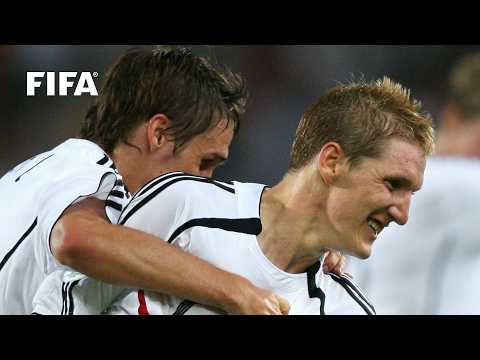
We present this content in a sports-style analytical format, inspired by professional football coverage and based on available verified information from the 2006 FIFA World Cup. Our analysis delves into the tactical breakdown, individual performances, and the lasting legacy of this memorable encounter.
Article Contents
- Introduction: The Summer Fairytale's Grand Finale
- The Day Schweinsteiger Lit Up Stuttgart
- Team Analysis: Klinsmann's Vision vs. Scolari's Stars
- Player and Coach Reactions: Jubilation and Reflection
- Tournament Impact: Building a Legacy for Future World Cups
- Expert Football Analysis: Tactical Nuances and Individual Brilliance
- Key Facts Grid
- Timeline: A Journey Through 2006 and Beyond
- What Happens Next: The Enduring Echoes of 2006
- Conclusion: A Defining Moment in German Football History
- Your Opinion Matters!
Introduction: The Summer Fairytale's Grand Finale
The 2006 FIFA World Cup, hosted by Germany, was more than just a football tournament; it was a celebration, a national awakening, and a 'Sommermärchen' – a summer fairytale. After a breathtaking journey that saw them capture the hearts of a nation and the admiration of the footballing world, Germany found themselves in the third-place play-off, following a heartbreaking semi-final defeat to eventual champions Italy. Their opponents, a star-studded Portugal side, led by the tactical genius Luiz Felipe Scolari and featuring talents like Luís Figo and a young Cristiano Ronaldo, also harbored ambitions of glory before falling to France in their own semi-final clash.
This match, often overshadowed by the final itself, was anything but a consolation fixture. For the host nation, it was an opportunity to conclude their incredible tournament on a high, to send their passionate fans home with one last reason to cheer, and to validate the progressive, attacking philosophy instilled by coach Jürgen Klinsmann. For Portugal, it was a chance to secure their best World Cup finish in decades and to give a fitting send-off to their captain and legend, Luís Figo. What transpired on July 8, 2006, at the Gottlieb-Daimler-Stadion in Stuttgart, would etch itself into the annals of German football history, primarily thanks to a scintillating performance from a young midfielder named Bastian Schweinsteiger.
This article dives deep into that pivotal encounter, exploring the circumstances, the key players, the tactical battles, and the profound impact this match had on the trajectory of German football, resonating even as we look towards future tournaments, including the highly anticipated FIFA World Cup 2026.
The Day Schweinsteiger Lit Up Stuttgart
The atmosphere in Stuttgart on July 8, 2006, was electric. Despite the sting of semi-final elimination, the German public embraced their team with fervent support, eager for a triumphant farewell. Klinsmann's Germany, known for their attacking verve and youthful exuberance, faced a Portuguese side that blended seasoned veterans with burgeoning superstars. The stage was set for an open, entertaining encounter, and it delivered in spectacular fashion.
From the outset, Germany demonstrated their intent, playing with freedom and an undeniable hunger. The first half saw end-to-end action, but both goalkeepers, Oliver Kahn for Germany and Ricardo for Portugal, held firm. However, the second half belonged unequivocally to Bastian Schweinsteiger. In the 56th minute, the young midfielder collected the ball on the left wing, cut inside with purpose, and unleashed a powerful, dipping shot from outside the box that soared past Ricardo into the top corner. The stadium erupted, a wave of black, red, and gold washing over Stuttgart.
Just five minutes later, Schweinsteiger was at it again. Another audacious strike from distance, this time from the opposite flank, was fiercely driven towards goal. The shot took a deflection off Portugal’s Petit, wrong-footing Ricardo and finding the back of the net. While officially recorded as an own goal, the assist and the sheer impetus came from Schweinsteiger's relentless offensive play, effectively putting Germany two goals ahead and in a commanding position. The energy and directness of Schweinsteiger were simply too much for the Portuguese defense to handle.
Schweinsteiger wasn't done yet. In the 78th minute, he delivered a perfectly weighted free-kick from a wide position, which was met by Michael Ballack, whose header was directed towards goal. Ricardo saved it initially, but the rebound fell kindly, and while the exact sequence of the third German goal sometimes leads to debate on who ultimately scored, it was another moment where Schweinsteiger's involvement in a set-piece directly led to a goal, sealing Germany's dominant 3-1 victory. Nuno Gomes pulled one back for Portugal late in the game, a mere consolation, but it was Germany’s day, and specifically, Schweinsteiger’s.
This performance wasn't just about the goals; it was about Schweinsteiger's fearless attacking runs, his vision, and his ability to dictate the pace of the game. He embodied the spirit of Klinsmann's new-look Germany – dynamic, ambitious, and brimming with potential. The final whistle brought a roar of approval from the stands, confirming Germany's third-place finish and marking a high point for a nation that had dared to dream big.
Team Analysis: Klinsmann's Vision vs. Scolari's Stars
Germany: The Unveiling of a New Era
Jürgen Klinsmann's appointment as Germany coach in 2004 was met with skepticism, but his vision was clear: to rejuvenate a stagnant national team with youth, fitness, and an aggressive, attacking philosophy. The 2006 World Cup was the culmination of two years of radical changes, including bringing in sports scientists and implementing modern training methods. Players like Philipp Lahm, Lukas Podolski, Per Mertesacker, and of course, Bastian Schweinsteiger, were given prominent roles, symbolizing a departure from older, more conservative approaches.
Against Portugal, Klinsmann's tactical setup allowed for fluid movement and pressing. The team played with an intensity that reflected their coach's unwavering belief. Oliver Kahn, the veteran goalkeeper, was given the nod for this match, a gesture of respect and a final World Cup appearance after losing his starting spot to Jens Lehmann. This blend of experience and youthful exuberance proved potent. Germany’s desire to finish strong for their home crowd was palpable, and their tactical discipline, combined with individual brilliance, saw them overwhelm a talented Portuguese side.
Portugal: A Golden Generation's Swansong and Rising Star
Under the guidance of Brazilian World Cup-winning coach Luiz Felipe Scolari, Portugal had emerged as a formidable force, reaching the final of Euro 2004 and now the semi-finals of the World Cup. Their squad boasted a 'Golden Generation' led by Luís Figo, Pauleta, and Deco, alongside the electrifying talent of a young Cristiano Ronaldo, then just 21 years old and already a global phenomenon. Scolari's tactical approach was typically pragmatic, focusing on defensive solidity combined with individual flair in attack.
However, the disappointment of their semi-final loss to France seemed to weigh heavily on the Portuguese. Despite flashes of brilliance, particularly from Ronaldo, they struggled to match Germany's intensity and clinical finishing in the third-place play-off. Figo, playing his final international match, tried to inspire, but the collective drive that had carried them through the tournament seemed to wane. The match ultimately highlighted the challenges of motivating a team for a third-place fixture after the ultimate prize is no longer within reach, especially against a highly motivated host nation.
Player and Coach Reactions: Jubilation and Reflection
Schweini's Ascent and Klinsmann's Pride
For Bastian Schweinsteiger, the match against Portugal was a defining moment. His two goals and instrumental role cemented his status as a national hero and a player of immense potential. Post-match, Schweinsteiger expressed his immense joy, stating, "This is fantastic, sensational. We wanted to end on a high, and we did it. It was a great feeling to score those goals in front of our home fans." His performance, reminiscent of his idol Michael Ballack, showcased his growing maturity and ability to influence big games.
Jürgen Klinsmann, beaming with pride, lauded his team's effort and the overall success of the tournament. "We played with so much heart and passion. This team has grown tremendously," he commented. Klinsmann's tenure marked a significant cultural shift in German football, laying the groundwork for future triumphs. He recognized the profound impact of the team's performance, not just on the pitch, but on the national spirit. The 'Sommermärchen' was largely his brainchild, and the third-place finish was a testament to his bold vision.
Portuguese Reflection
On the Portuguese side, there was a mix of disappointment and a sense of accomplishment. Luís Figo, making his final appearance in the national jersey, received a standing ovation from both German and Portuguese fans as he was substituted late in the game. His farewell was bittersweet, acknowledging the end of a glorious international career without a major trophy, but with the pride of leading a talented squad to a World Cup semi-final. Cristiano Ronaldo, though frustrated by the result, showed glimpses of the brilliance that would soon make him the world's best. The tournament was a crucial stepping stone in his burgeoning career, providing invaluable big-game experience.
Luiz Felipe Scolari, while disappointed, maintained a dignified stance. He acknowledged Germany's strong performance and praised his team's efforts throughout the tournament. The loss, though painful, offered valuable lessons for a team still developing its identity, particularly with the youth of players like Ronaldo.
Tournament Impact: Building a Legacy for Future World Cups
The 2006 FIFA World Cup, and specifically Germany's performance in it, had a seismic impact on the trajectory of German football. The third-place finish, capped by the emphatic win over Portugal, was more than just a bronze medal; it was a powerful statement about the country's footballing resurgence. It instilled a renewed sense of national pride and confidence in a team that was previously seen as being in decline.
This tournament became the springboard for what would later be known as Germany's "Golden Generation." The young talents like Schweinsteiger, Lahm, Podolski, and Mertesacker gained invaluable big-tournament experience on home soil, forging a strong bond and a winning mentality. The attacking, high-tempo style of play pioneered by Klinsmann continued under his successor, Joachim Löw, culminating in Germany reaching the semi-finals of the 2010 World Cup and ultimately winning the tournament in 2014.
For Portugal, the tournament marked a significant achievement, reaching the semi-finals for only the second time in their history. While they couldn't secure third place, the experience was crucial for the development of their emerging stars, particularly Cristiano Ronaldo. It provided the impetus for Portugal to continue investing in youth development and refining their tactical approach, leading to their eventual triumphs in UEFA Euro 2016 and the 2019 UEFA Nations League.
Looking ahead to the FIFA World Cup 2026, the legacy of 2006 offers several enduring lessons. It demonstrated the immense power of home advantage, the importance of fostering young talent, and the impact of a clear, modern tactical philosophy. Germany's journey showed that even without winning the ultimate prize, a strong, inspiring performance can fundamentally transform a national team's trajectory for years to come. Such historical performances continue to shape expectations and strategies for host nations and competing teams alike, providing a rich tapestry of tactical and psychological insights for analysts and fans anticipating the next global spectacle.
Expert Football Analysis: Tactical Nuances and Individual Brilliance
From a tactical perspective, the Germany vs. Portugal third-place play-off in 2006 offered a compelling study in contrasting styles and the decisive impact of individual brilliance. Jürgen Klinsmann's Germany, operating in a 4-4-2 formation (at times transitioning to a 4-2-3-1 with Schweinsteiger and Podolski on the flanks and Ballack as the central attacking midfielder), prioritized high pressing, quick transitions, and fluid attacking movement. Their central midfielders, particularly Torsten Frings, provided a strong defensive screen, allowing the wide players to push high and support the lone striker Miroslav Klose.
Bastian Schweinsteiger's role was particularly crucial. Often drifting in from the left wing, he exploited the space between Portugal's midfield and defense. His ability to cut inside onto his stronger right foot and unleash powerful shots was a key tactical instruction that paid dividends. Portugal's 4-2-3-1 formation, featuring Maniche and Costinha as holding midfielders, aimed to control the center, but they struggled to contain Germany's energetic wide play and directness, especially from Schweinsteiger.
Luiz Felipe Scolari's Portugal relied heavily on the individual brilliance of Luís Figo and Cristiano Ronaldo. Figo, on the right wing, was still capable of moments of magic, while Ronaldo, often deployed on the left or as a second striker, posed a constant threat with his pace and dribbling. However, Germany's disciplined defense, led by Christoph Metzelder and Per Mertesacker, managed to largely nullify Portugal's primary attacking outlets for significant periods. Oliver Kahn's authoritative presence in goal for his final World Cup game also provided an added layer of confidence.
The match underscored the importance of midfield dominance and the ability of a player to single-handedly change the complexion of a game. Schweinsteiger wasn't just scoring goals; he was driving Germany forward, creating chances, and disrupting Portugal's rhythm. His performance was a testament to Klinsmann's philosophy of empowering players to express themselves offensively. The tactical battle between Klinsmann's youthful dynamism and Scolari's experienced pragmatism ultimately swung in favor of the former, largely due to Germany's superior energy, tactical execution, and a standout performance from their midfield maestro.
Competition
FIFA World Cup 2006 Third-Place Play-off
Teams
Germany vs. Portugal
Date
July 8, 2006
Venue
Gottlieb-Daimler-Stadion, Stuttgart, Germany
Result
Germany 3 - 1 Portugal
Main Topic
Germany's Third Place Victory, Bastian Schweinsteiger's Masterclass
Timeline: A Journey Through 2006 and Beyond
June 9, 2006: FIFA World Cup Kicks Off
The 2006 FIFA World Cup, hosted by Germany, begins with an electric opening ceremony and Germany's impressive 4-2 victory over Costa Rica, setting a positive tone for the 'Sommermärchen'.
July 5, 2006: Semi-Final Heartbreak
Both Germany and Portugal face agonizing semi-final defeats. Germany loses 2-0 to Italy in extra time in a thrilling match, while Portugal falls 1-0 to France, setting up their third-place play-off.
July 8, 2006: Schweinsteiger's Masterclass
Germany defeats Portugal 3-1 in the third-place play-off in Stuttgart, largely thanks to two sensational goals and an influential performance from Bastian Schweinsteiger, securing third place for the hosts.
Post-Tournament: National Celebration and New Beginnings
Germany celebrates a successful tournament as hosts, witnessing a renewed sense of national unity and pride. The young German squad is hailed as the foundation for future success, and Bastian Schweinsteiger becomes a household name.
2010-2014: Germany Builds a Dynasty
Building on the foundation laid in 2006, Germany consistently performs at the highest level, reaching the semi-finals of the 2010 World Cup and ultimately lifting the coveted trophy in 2014, with many of the 2006 squad members playing key roles.
Leading to FIFA World Cup 2026: Enduring Inspiration
The 2006 World Cup remains a significant reference point for host nations and developing young footballing talent. Its lessons in team building, tactical evolution, and fan engagement continue to inspire teams and organizers preparing for future global spectacles, including the highly anticipated FIFA World Cup 2026.
What Happens Next: The Enduring Echoes of 2006
The reverberations of Germany's 2006 FIFA World Cup campaign, capped by the emphatic victory over Portugal, continue to be felt in German football and beyond. For players like Bastian Schweinsteiger, the tournament was a launchpad, solidifying his path to becoming a Bayern Munich and national team legend, eventually captaining his country and lifting the World Cup trophy in 2014. The experience gained on home soil, under immense pressure and scrutiny, was invaluable for an entire generation of German footballers.
Strategically, the 2006 World Cup solidified Germany's commitment to modern footballing principles – youth development, attacking football, and a strong emphasis on sports science. This long-term vision has profoundly shaped the Bundesliga and the German national team's success in subsequent years. The DFB (German Football Association) invested heavily in academies and coaching education, ensuring a continuous pipeline of talent. This structural change, arguably kickstarted by Klinsmann's audacious approach in 2006, continues to be a blueprint for success.
As we look towards the FIFA World Cup 2026, the story of 2006 serves as a powerful reminder of how a host nation can galvanize its team and its people. It highlights that success is not always measured solely by lifting the trophy, but by the legacy created, the new standards set, and the inspiration ignited. National teams around the world, including Germany and Portugal, will undoubtedly draw upon the lessons of past tournaments, striving to build squads capable of creating their own indelible memories and making a profound impact on the global stage. The emotional connection forged between the German team and its supporters in 2006 set a benchmark for future tournaments, showcasing the transformative power of football.
Conclusion: A Defining Moment in German Football History
The 2006 FIFA World Cup third-place play-off between Germany and Portugal was more than just a battle for bronze; it was a testament to the enduring spirit of football, the emergence of a new generation of talent, and the transformative power of a home tournament. Bastian Schweinsteiger's magnificent performance against a formidable Portuguese side remains etched in the memory of fans, a dazzling display of skill, determination, and youthful exuberance that perfectly encapsulated Germany's 'Sommermärchen'.
This match not only provided a thrilling end to Germany's memorable tournament but also laid crucial groundwork for their future successes, proving that tactical innovation and nurturing young talent can lead to sustained excellence on the world stage. For Portugal, it was a moment of reflection, recognizing the end of one era and the bright promise of another, spearheaded by Cristiano Ronaldo. The legacy of 2006 continues to inspire, reminding us that every World Cup game, every moment of brilliance, contributes to the rich tapestry of football history, shaping narratives and influencing ambitions for tournaments yet to come, including the grand spectacle of the FIFA World Cup 2026.
The roar of the Stuttgart crowd, the golden glow of the setting sun, and Schweinsteiger's jubilant celebrations – these images encapsulate a moment when German football rediscovered its joy and its pathway to glory, a pathway that began with a thrilling victory on home soil.
⚽ What do you think about this iconic match and Germany's 2006 World Cup campaign?
Share your opinion in the comments and follow for more football updates and in-depth analysis from the world of FIFA!


No comments:
Post a Comment