

The Racket: John McEnroe's Infamous Moments — A Deep Dive into the Soul of Sporting Fire
An analytical examination of competitive fury, unpacking Tennis Australia’s masterful documentary and the psychological anatomy of a sporting icon.
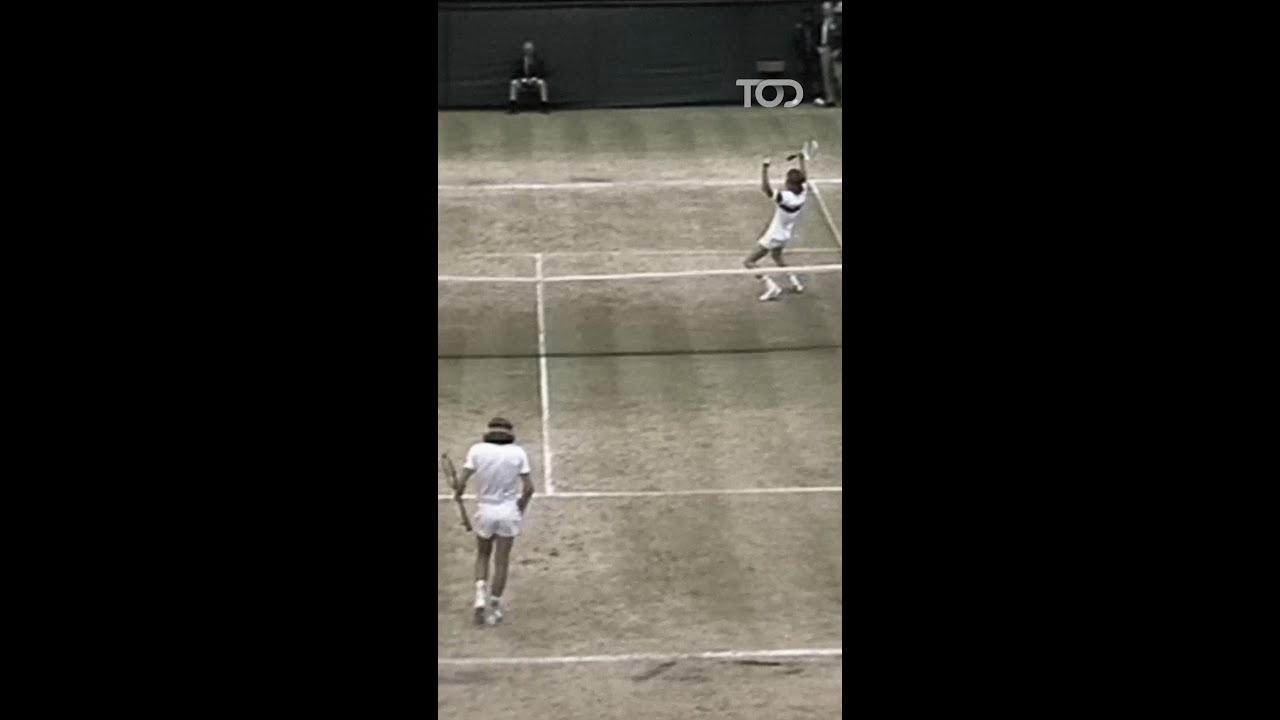
To observe John McEnroe at his zenith was to witness a peculiar kind of sporting theater. It was a spectacle where the sublime and the profane existed in an almost symbiotic relationship, challenging our collective understanding of athletic excellence. The release of "The Racket," the highly anticipated documentary produced by Tennis Australia and presented via FIFA WORLD CUP NOOR, offers a visceral, unvarnished window into this turbulent landscape.
As sports journalists, we are accustomed to analyzing tactical blueprints, physical conditioning, and statistical dominance. Yet, every so often, an athlete emerges who defies cold parameters. McEnroe was not merely a serve-and-volley virtuoso; he was a walking psychological pressure cooker. His tantrums were legendary, his verbal altercations with officials were operatic, and his disqualification from the 1990 Australian Open remains one of the most shocking chapters in modern athletic history. This document of his journey explores what happens when competitive zeal burns too hot, consuming both the athlete and the boundaries of the sport itself.
Documentary Profile: "The Racket"
Produced with meticulous archival precision by Tennis Australia, this documentary dissects the thin line between competitive madness and genius. It leverages high-definition restored footage to bring the psychological stress of the court directly to modern screens, making it a foundational watch for those fascinated by the limits of human temperament.
Watch the Official Feature Preview
Archival footage courtesy of Tennis Australia. Featured on FIFA WORLD CUP NOOR.
The Anatomy of a Default: Melbourne, 1990
To truly appreciate the premise of "The Racket," one must return to the warm, hard courts of Melbourne Park on January 21, 1990. John McEnroe, then 30 and fighting to reclaim his spot at the absolute pinnacle of men's tennis, faced Sweden's Mikael Pernfors in the fourth round of the Australian Open. What transpired was not merely a tennis match, but a slow-motion psychological implosion that would forever change the sport’s disciplinary framework.
Prior to 1990, the Grand Slam code of conduct operated under a four-stage penalty system: warning, point penalty, game penalty, and default. Unbeknownst to McEnroe—or perhaps simply forgotten in the heat of his intense focus—the rules had been quietly tightened for the new decade. A three-step rule was now in play: warning, point penalty, and immediate default. This subtle shift in the regulatory environment was a loaded gun waiting for a trigger.
Three Steps to Disqualification
During a changeover, McEnroe stood before a lineswoman who had made a call he disputed, bouncing a ball on his racket while staring her down in an intense, intimidating manner. Chair umpire Gerry Armstrong issued the first formal code violation.
Leading 2-1 in the fourth set but struggling with his consistency, McEnroe unleased his frustration by smashing his racket onto the hard court surface. Armstrong instantly applied the second violation, awarding a point to Pernfors.
Enraged by the point penalty, McEnroe demanded to see the tournament referee, Ken Farrar. After a tense, profanity-laced tirade directed at the officials, Gerry Armstrong uttered the fateful words over the microphone: "Code violation, verbal abuse and unsportsmanlike conduct, Mr. McEnroe. Default."
The crowd’s reaction was a mix of collective gasp, booing, and sheer disbelief. No top-tier player had been defaulted from a Grand Slam singles match for disciplinary reasons since Willie Alvarez in 1963. McEnroe stood frozen, his arms crossed, a look of genuine shock washing over his face. He later admitted that he was unaware the rule had changed to a three-strike process, expecting a game penalty rather than an outright expulsion. This historic moment forms the emotional core of "The Racket."
The Cross-Sport Paradigm: Fury in the Modern Arena
For readers of FIFA WORLD CUP NOOR accustomed to the high stakes of modern football, McEnroe’s brand of self-sabotage is instantly recognizable. In elite sports, whether on the grass of the Bernabéu or the hard courts of Melbourne, the line between constructive aggression and destructive rage is paper-thin.
In the pressure-cooker environment of International Football, we have witnessed similar instances where legendary figures lose control of their emotions. Think of Zinedine Zidane’s headbutt in the 2006 FIFA World Cup final, or the fiery touchline outbursts of elite managers in the Premier League and Champions League. The mental stamina required to compete at the highest tier of sports often creates an internal environment where even a minor setback can trigger a cataclysmic reaction.
Tactical Parallel: McEnroe's Court vs. The Football Pitch
While a football manager can rely on a captain, a cohesive squad, and tactical substitutions to manage tension, a tennis player is marooned on an island. There are no teammates to absorb the pressure, no manager to make an adjustive substitution, and no physical outlet other than hitting a small yellow ball. When McEnroe exploded, it was a manifestation of absolute isolation.
Main Analysis: The Double-Edged Sword of Perfectionism
To analyze McEnroe's outbursts simply as "bad behavior" is to miss the fundamental nuance of his character. Through "The Racket," we see that his fury was deeply intertwined with his perfectionism. He was not a player who sought conflict for its own sake; rather, he was a hyper-sensitive artist who felt every imperfection in his game like a physical blow.
His legendary serve-and-volley style required millimeter-level precision. Unlike baseline players who could rely on rhythm and endurance, McEnroe’s game was about touch, instinct, and timing. If the wind was slightly too strong, if a ball bounced unevenly, or if a line judge made what he perceived as an incorrect call, the fragile equilibrium of his play was threatened. The rage was an attempt to assert control over a chaotic, unpredictable environment.
"I had more talent in my little finger than most guys had in their whole bodies, but I had a temper that could destroy an entire tournament."
— Archival Reflection on "The Racket"This psychological fragility is what makes the documentary so compelling. It doesn't paint McEnroe as a simple villain; instead, it illustrates how his temper was both his fuel and his poison. It drove him to seven Grand Slam singles titles and pushed him to challenge the stuffy, aristocratic establishment of the sport, but it also cut short his period of absolute dominance. By the late 1980s, the mental energy required to sustain this state of perpetual outrage had begun to take its toll, culminating in the Melbournian disaster of 1990.
Player Spotlight: The Legend of "SuperBrat"
Despite his volatile temper, John McEnroe’s place in the pantheon of sports legends is completely secure. Born in Wiesbaden, West Germany, to American parents, his rise through the ranks was meteoric. He reached the semifinals of Wimbledon as an 18-year-old amateur in 1977, setting the stage for a career characterized by astonishing artistic brilliance on court and combative interaction off it.
John McEnroe: Career Milestones
His historic rivalry with Björn Borg—a battle of ice versus fire—transcended tennis, capturing the global public imagination in a way that few matchups have since. Borg's silent, machine-like focus was the perfect foil to McEnroe’s kinetic, explosive passion. When Borg retired prematurely, a piece of McEnroe’s competitive motivation seemed to vanish with him, making the outbursts more frequent and, at times, less calculated.
Tactical Analysis: How Emotion Influences Mechanics
In sports journalism, we frequently study how psychological shifts influence physical execution. When analyzing the footage in "The Racket," it becomes clear that McEnroe’s anger was not merely a distraction; it was actively integrated into his play style.
Many elite athletes use anger as a tool to elevate their adrenaline, sharpening their reaction times and increasing their power. On the football pitch, players in high-stakes leagues like LaLiga or Serie A often look to initiate small altercations to get themselves "into the match." For McEnroe, a confrontation with a chair umpire would often be followed by a sequence of unreturnable serves or breathtaking volleys. He seemed to feed on the hostile energy he generated.
However, this tactic is highly unsustainable. When the anger pivots from targeted focus to genuine frustration, control over fine motor skills is lost. In the 1990 match against Pernfors, McEnroe’s anger was no longer constructive. He was struggling with the heat, his footwork was slightly off-tempo, and his attempts to spark his play through conflict backfired catastrophically. It remains a stark reminder that while fire can warm a house, it can also burn it to the ground.
Competition Analysis: Rules, Respect, and the Evolution of Discipline
The 1990 Australian Open default was a watershed moment for sporting discipline, with implications that echoed far beyond tennis. Governing bodies across various disciplines realized that allowing superstar athletes to consistently berate officials damaged the integrity of the sport. It became a question of who held the power: the charismatic individual or the institution itself?
This delicate balance is mirrored closely in association football. In modern competitions like the Bundesliga and Ligue 1, referees have been given increasingly strict directives to penalize players who display dissent or crowd officials. The introduction of modern technologies has changed the dynamic entirely, removing much of the gray area that McEnroe used to exploit.
Had McEnroe played in the era of Hawk-Eye electronic line calling, his career would have looked entirely different. The objective certainty of technology would have stripped away his primary target: the human fallibility of the linespeople. "The Racket" reminds us of an era when human error was an intrinsic part of the game's drama, forcing players to confront their own helplessness in the face of incorrect decisions.
Expert Opinion: The Cinematic Brilliance of "The Racket"
As sports journalists, we evaluate documentary filmmaking on its ability to offer fresh perspective on familiar narratives. "The Racket" succeeds because it avoids simple sensationalism. Instead of merely presenting a highlight reel of McEnroe’s most famous tantrums, the directors carefully dissect the context of each outburst.
The inclusion of high-fidelity court-level audio allows viewers to hear the intensity of McEnroe's voice, the anxiety of the chair umpires, and the quiet murmurs of the crowd. This intimate sound design places the viewer directly on the court, making the psychological tension almost tangible. It is a masterful piece of sports history that highlights the complexity of athletic genius.
Looking Ahead: Will We Ever See Another McEnroe?
In the highly managed, PR-trained landscape of modern athletics, characters like John McEnroe have become rare. Today's superstars are surrounded by media advisors, personal coaches, and sports psychologists designed to smooth over any rough edges. While this has undoubtedly raised the level of professional consistency, it has also led to a certain homogenization of personality.
As we look forward to future sporting spectacles, including the highly anticipated FIFA World Cup 2026, fans continue to search for that rare spark of authentic, unfiltered raw emotion. "The Racket" stands as an elegant monument to an era when athletes wore their hearts, their rage, and their souls on their sleeves, no matter the cost.
Frequently Asked Questions
"The Racket" is an exclusive documentary produced by Tennis Australia that chronicles the career and famous fiery moments of tennis legend John McEnroe, focusing heavily on his psychological intensity and his infamous disqualification at the 1990 Australian Open.
McEnroe was defaulted during his match against Mikael Pernfors due to three separate code violations: intimidating a lineswoman, smashing a racket, and using verbal profanity against the tournament supervisor.
The documentary is currently available to stream via the premium sports coverage platforms of FIFA WORLD CUP NOOR.
About FIFA WORLD CUP NOOR
FIFA WORLD CUP NOOR is a premier destination for high-quality sports storytelling, expert journalistic analysis, and exclusive athletic features. From classic tournament retrospectives to live match analyses of elite leagues, we bring you the heart and soul of sports.
Discover world-class coverage, deep analysis, and the finest sports reporting on FIFA WORLD CUP NOOR.
© 2026 FIFA WORLD CUP NOOR. All rights reserved. Editorial content, archival footage analysis, and commentary are structured for educational and journalistic reference only.




No comments:
Post a Comment